
Copenhagen in 3 days: the itinerary I'd give a friend
Three days is the sweet spot for Copenhagen: long enough to see the famous things without rushing, short enough that the order you do them in genuinely matters. I'm Felipe, a local guide, and this is the plan I actually give friends who visit, built around walking distances instead of a wish list, so you're not crossing the city twice in one afternoon.
1. How to plan 3 days in Copenhagen
Copenhagen is small. The historic centre is about 2 km across, and you can walk from Nyhavn to Tivoli in twenty minutes without hurrying. That's the single most useful fact for planning: the thing that eats your time here isn't distance, it's backtracking. Most itineraries you'll find online are lists of attractions in popularity order, which means you cross the same canal four times in three days.
This one is built the other way round: each day is a geographic cluster you can walk, with one optional bike or metro hop. Day 1 covers the historic centre and the royal quarter, Day 2 pairs the museum district with Christianshavn and Christiania, and Day 3 gets you out of the postcard into the neighbourhoods where people actually live.
Two decisions are worth making before you arrive, because both are cheaper to sort out in advance: where you sleep (it changes your walking times every single morning, see the neighbourhood-by-neighbourhood guide to where to stay) and whether you buy a Copenhagen Card, which only pays off on days with three or more paid attractions. This itinerary flags where each one matters.
The Itinerary
2. Three days in Copenhagen, day by day
Each day is walkable end to end. Timings are realistic, not optimistic: they assume you stop for coffee and don't run between sights.
Day 1: the historic centre and the royal quarter
Nyhavn, Amalienborg, Rosenborg and Strøget, all on footStart at Christiansborg Palace around 09:30 and climb the tower first: it's the best free view in the city and the queue is nothing before 10:00. From there it's a ten-minute walk through the old centre to Rundetårn, the 17th-century Round Tower with its spiral ramp instead of stairs, then five more minutes to Rosenborg Castle and the Crown Jewels, with King's Garden right outside for a break.
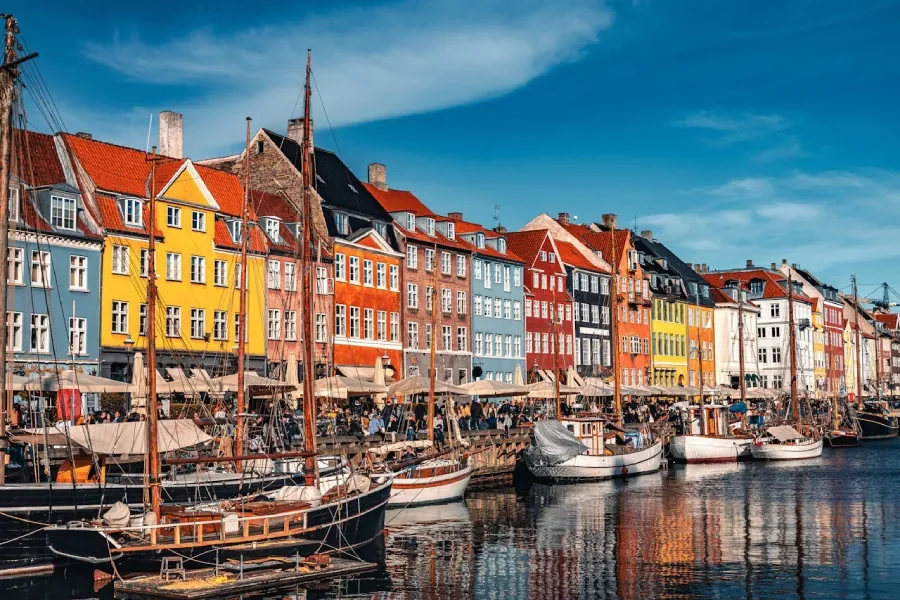
Time lunch near Torvehallerne, then walk down to Amalienborg for the changing of the guard at noon if your timing works, or any time after for the square itself. Finish at Nyhavn in the late afternoon, when the light hits the coloured facades, and walk Strøget back into town for dinner. Full detail on every stop is in the Indre By guide.
- Walking time: roughly 4 km spread across the day, all flat
- Start: Christiansborg Palace, Slotsholmen
- Paid stops: Round Tower ~40 DKK, Rosenborg ~140 DKK; Christiansborg Tower is free
- Skip if short on time: the Little Mermaid, it's a 25-minute detour for a small statue
Tip: Do the tower at Christiansborg first, not last. It closes earlier than you'd expect and it's the one free thing on Day 1 that people consistently miss. More context on all of these in the heritage sites guide.
Day 2: museums, Christianshavn and Christiania
The indoor day, and the one where a Copenhagen Card can pay for itselfOpen with the National Museum of Denmark, 150 DKK and genuinely good, then choose a second museum depending on taste: Ny Carlsberg Glyptotek for antiquities and a palm-filled winter garden, Designmuseum Danmark for the Danish design story, or SMK for the national art collection. Doing all three in one day is a classic over-ambition; two is plenty. The museums guide has hours and prices for each.
After lunch, cross the Inner Harbour Bridge into Christianshavn: canals, houseboats, and the corkscrew spire of Vor Frelsers Kirke, which you can climb for a view most visitors never get. Then walk into Christiania before dark. Read the Christiania guide before you go: there are real rules about photography, and knowing them changes the visit.
- Walking time: around 3 km, plus one bridge crossing
- Start: National Museum of Denmark, Ny Vestergade 10
- Paid stops: one or two museums, roughly 130-150 DKK each
- Rainy-day swap: this is the day to move if the forecast is bad, it's almost all indoors
Tip: If you're going to buy a Copenhagen Card, activate it on this morning, not on arrival day. Day 2 is the only one in this itinerary that stacks enough paid entries to beat the card's price.
Day 3: neighbourhoods, the harbour and one thing that's yours
Nørrebro or Vesterbro in the morning, water in the afternoonDay 3 is deliberately looser, because by now you'll know what you actually like. Pick one neighbourhood and give it a morning: Nørrebro for Jægersborggade, Assistens Cemetery and the best coffee in the city, or Vesterbro for Kødbyen, vintage shops and the Carlsberg district. Both are a 15-minute bike ride from the centre and neither feels like a tourist route.
In the afternoon, get on or near the water. That means Reffen and the harbour buses in summer (see the street food markets guide), a harbour bath if it's warm enough, or a canal boat year-round. If the weather has turned, swap in a proper bakery crawl and a long lunch instead: it's a completely legitimate way to spend a Copenhagen afternoon.
- Walking time: your call, 2-6 km depending on the neighbourhood
- Best transport: a rental bike, see the cycling guide
- Typical spend: low, this is the cheapest of the three days
- Leaving today? harbour buses 991/992 count as normal transport, so a City Pass covers them
Tip: Don't schedule the airport run tight. The metro to CPH takes about 15 minutes from Kongens Nytorv and runs 24 hours, but the security queue at Terminal 2 is the part that catches people out.
Quick Reference
3. The three days at a glance
If you only have two days, drop Day 3. If you have four, split Day 2 in half and add a day trip.
| Day | Area | Best for | Weather |
|---|---|---|---|
| Day 1 | Indre By and Frederiksstaden | First-timers, walking, photos | Better on a clear day |
| Day 2 | Museum district and Christianshavn | Rain, culture, Copenhagen Card value | Works in any weather |
| Day 3 | Nørrebro or Vesterbro, plus the harbour | Feeling like a local, food, water | Best when warm |
Plan Your Spend
4. What 3 days in Copenhagen actually costs
Per person, excluding accommodation and flights. These are the numbers I'd budget, not the cheapest theoretically possible.
A realistic daily total
Mid-range, per person per day: 150-250 DKK on food if you use markets and bakeries for two meals, 100 DKK for a 24-hour City Pass if you're using transport properly, and 0-300 DKK on attractions depending on the day. That puts a comfortable three days at roughly 1,300-1,900 DKK per person, or noticeably less if you lean on the free options.
Where the money actually goes
Sit-down dinners are what break a Copenhagen budget, not attractions. A main course at a normal restaurant runs 200-300+ DKK, while a full meal at a street food market is 60-150 DKK. Two market meals and one restaurant dinner per day is the split that keeps costs sane without eating badly.
The card question
A 24-hour Copenhagen Card is around 589 DKK and a 48-hour around 859 DKK. On this itinerary it only makes sense for Day 2, and only if you're doing two paid museums plus transport. For Days 1 and 3 a City Pass from 100 DKK is the better buy.
Doing it on very little
Day 1's best view (Christiansborg Tower) is free, the David Collection on Day 2 is free, and Day 3 can cost almost nothing. my guide to free things to do in Copenhagen covers the rest, and it's genuinely enough to fill a day.
5. Practical tips that save you a morning
Book Rosenborg and Tivoli online
Not for the discount, for the queue. Both sell timed entry and both develop a real line by 11:00 in summer.
The changing of the guard is at noon
Every day, at Amalienborg. It's free, it takes about 30 minutes, and it's the one fixed appointment in this whole itinerary. Build Day 1 around it or skip it deliberately, don't discover it by accident at 12:20.
Rent a bike on Day 3, not Day 1
Copenhagen's cycling infrastructure is genuinely the best in the world, but the first day is the one where you're still orienting yourself. By Day 3 you'll read the lanes instinctively. The cycling guide covers rental prices and the rules that actually get enforced.
Sunday is not a dead day
Unlike much of continental Europe, Copenhagen's museums, markets and most shops on Strøget open on Sundays. Monday is the day to check: several museums close.
Weather changes the order, not the plan
If Day 1 looks wet, swap it with Day 2. That's the whole reason the museum day exists as a self-contained block.
Leaving room for a day trip
If you end up with a spare half-day, Louisiana Museum of Modern Art and Kronborg Castle are both under an hour by train. The day trips guide ranks all twelve options by how much of a day they actually consume.
FAQ
6. Copenhagen in 3 days: frequently asked questions
The questions I get asked most often by people planning a short trip.
Yes, comfortably. Three days covers the historic centre, the main museums, Christiania and at least one residential neighbourhood without rushing. A fourth day is best spent on a day trip rather than more of the city centre.
Group by geography, not by popularity. Day 1: Indre By and the royal quarter on foot. Day 2: the museum district plus Christianshavn and Christiania. Day 3: one neighbourhood (Nørrebro or Vesterbro) and the harbour. That order avoids crossing the city centre more than once a day.
Usually not for the full three days. The card only beats individual tickets on a day with three or more paid attractions, which on this itinerary is Day 2 at most. A City Pass from 100 DKK for transport plus individual tickets is normally cheaper.
Almost. The historic centre is about 2 km across and completely flat, so Days 1 and 2 are walkable end to end. Day 3 is easier with a bike or the metro, since Nørrebro and Vesterbro sit just outside the centre.
Indre By if you want to walk out of the door into Day 1, Vesterbro if you want better value and a shorter walk to Central Station. Both are covered in detail in my guide to where to stay in Copenhagen.
Budget roughly 1,300-1,900 DKK per person for three days excluding accommodation. Food is the biggest variable: market meals run 60-150 DKK against 200-300+ DKK for a restaurant main course.
The Little Mermaid, if your time is tight. It's a 25-minute round trip from Amalienborg for a statue that most visitors find smaller than expected. Christiansborg Tower, which is free, gives you far more for the same half hour.
My Local Take
7. Final thoughts: my take
If you only remember one thing from this itinerary, make it this.
Resist the urge to add. The most common mistake I see with three-day plans isn't picking the wrong sights, it's picking too many and spending the trip in transit. Copenhagen rewards the opposite instinct: one long lunch, one unplanned hour by the water, one neighbourhood you walk without a list. Those are what people remember, not the fourth museum.
If you cut anything, cut Day 1's Little Mermaid detour and Day 2's third museum. If you add anything, add time, not stops. And if you only take one thing from this page: do the days in geographic clusters, and the city will feel twice as big as your feet say it is.
Join the conversation
Comments
Questions, tips or corrections about this guide? Leave a comment, every comment is checked before it goes live.
Be the first to comment on this guide.
Thanks for your comment!
It's in the queue for review and will appear here once it's approved.