
Where to stay in Copenhagen: the areas, honestly compared
Copenhagen is small enough that no area is a bad choice, and that's exactly why the advice online is so useless: everything gets called central. I'm Felipe, a local guide, and what actually changes your trip here is how far you walk before breakfast and what your street looks like at 22:00. Here are the six areas worth considering, ranked by who they genuinely suit.
1. How to choose an area in Copenhagen
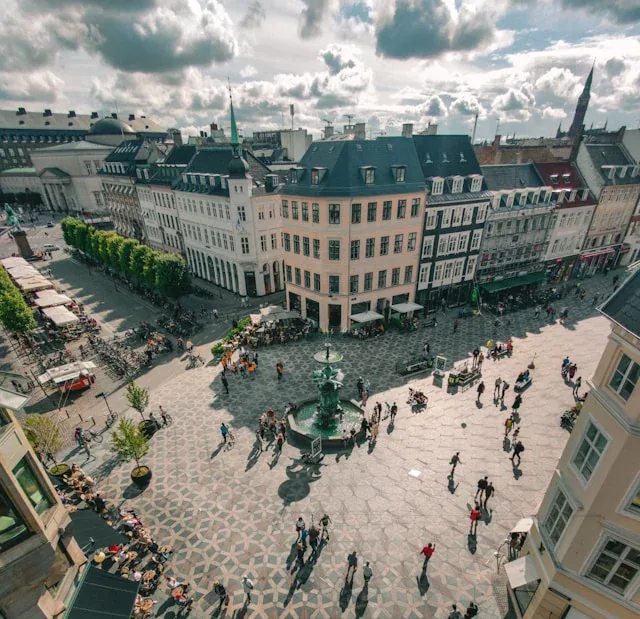
Start from the truth that makes this easy: Copenhagen's centre is about 2 km across and the metro reaches most of the city in under fifteen minutes. You are not going to be stranded anywhere on this list. What changes is the texture of your stay, whether you step out of the door into a UNESCO-grade square or into a street of bakeries and bike lanes.
So the useful question isn't "which area is central", it's "what do I want the five minutes after leaving the hotel to feel like". Three things decide that in practice: how much you'll walk to the sights on your first morning, how lively you want the street at night, and how much of your budget goes on the room instead of on dinner.
If you're building a short trip, read this alongside the 3-day Copenhagen itinerary: the areas below are ranked partly on how well they line up with that first day on foot.
The Ranking
2. The 6 best areas to stay in Copenhagen, ranked
Ranked on walking distance to the main sights, what the area is like in the evening, and value for money. Tap a name to open it in Google Maps.
Indre By
The historic centre: everything on foot, at the highest priceThis is the postcard: Nyhavn, Strøget, Rosenborg, Christiansborg and Amalienborg all inside a walkable square kilometre. If it's your first time in Copenhagen and you have two or three days, staying here removes transport from the equation entirely, you simply walk out and start.
The trade-offs are real. It's the most expensive area per night, the streets around Strøget empty out after the shops close, and the restaurants nearest the main squares are the ones charging tourist prices. Full detail on what's actually here in the Indre By guide.
- Best for: first-timers, short trips, travellers who don't want to use transport
- Not for: tight budgets, or anyone who wants a neighbourhood feel at night
- To Nyhavn: 5-15 minutes on foot
- Typical double room: 1,400-2,200 DKK a night in season
Tip: Aim for the streets between Gammeltorv and Nørreport rather than right on Strøget: same walking times, quieter at night, better food.
Vesterbro
Best overall value, and the best food per krone in the cityVesterbro sits immediately west of Central Station, which makes it the best-connected area on this list and the one I recommend most often. It went from red-light district to the city's food and nightlife centre in about two decades, and the result is a neighbourhood with real character that's still a fifteen-minute walk from Tivoli.
Kødbyen, the old meatpacking district, is the anchor: restaurants and bars in converted industrial halls. Around it you get vintage shops, coffee bars and Sønder Boulevard's long strip of benches and playgrounds. Everything in the Vesterbro guide.
- Best for: value, food, nightlife, anyone arriving by train or airport metro
- Not for: light sleepers who end up near Kødbyen on a Friday
- To Tivoli: about 15 minutes on foot
- Typical double room: 900-1,500 DKK a night in season
Tip: The blocks around Værnedamsvej are the sweet spot: still Vesterbro prices, but a calm, almost Parisian street of delis and wine bars rather than a nightlife strip.
Nørrebro
The most interesting neighbourhood to live in for a few daysNørrebro is where Copenhagen stops performing for visitors. It's the city's most multicultural district, built around Jægersborggade's row of tiny independent shops, the surprisingly beautiful Assistens Cemetery, and a food scene that runs from Michelin-starred Thai to the best shawarma in Scandinavia.
It's a genuine neighbourhood, which means it's cheaper, livelier on a Tuesday, and about a fifteen-minute bike ride or two metro stops from the centre. Read the Nørrebro guide for the specifics.
- Best for: repeat visitors, longer stays, travellers who want a local rhythm
- Not for: a two-day trip where every minute counts
- To the centre: 20-25 minutes on foot, 8 by bike
- Typical double room: 800-1,300 DKK a night in season
Tip: Stay near Sankt Hans Torv or the Lakes rather than deep along Nørrebrogade: you keep the neighbourhood and cut the walk to the centre almost in half.
Østerbro
Calm, green and residential, the family choiceØsterbro is Copenhagen's elegant residential district: wide streets, Fælledparken, and the harbour promenade out to Kastellet and the Little Mermaid. It's noticeably quieter than anywhere else on this list, which is either exactly what you want or precisely the problem.
For families it's the easiest area in the city, playgrounds everywhere, and it's the only district where you'll routinely have a park on your doorstep. Details in the Østerbro guide.
- Best for: families, longer stays, runners, anyone travelling with kids
- Not for: nightlife, or a first two-day visit
- To the centre: 25-30 minutes on foot, 10 by bike
- Typical double room: 900-1,400 DKK a night in season
Tip: If you're here with kids, this is also the best base for the city's biggest parks, Fælledparken alone can absorb a full afternoon.
Christianshavn
Canals and houseboats, five minutes from the centre and a world awayChristianshavn is an island of 17th-century canals, moored houseboats and low Dutch-style buildings, connected to the centre by a bridge you can walk in five minutes. It also contains Christiania, which makes it the most atmospheric address in Copenhagen and the most divisive.
It's small, so there aren't many rooms, and they go early. If you find one at a sane price, take it: waking up on a canal here is the closest Copenhagen gets to Amsterdam without the crowds.
- Best for: atmosphere, photographers, second visits
- Not for: choice, there simply isn't much accommodation
- To Nyhavn: about 10 minutes across the Inner Harbour Bridge
- Typical double room: 1,100-1,700 DKK a night in season
- Official website
Tip: Vor Frelsers Kirke's spiral spire is right here and you can climb it. Read the Christiania guide before wandering in, the photography rules are taken seriously.
Frederiksberg
Technically its own municipality, in practice the leafy west sideFrederiksberg is a separate municipality entirely surrounded by Copenhagen, and it feels like it: grand avenues, the enormous Frederiksberg Gardens, the zoo, and a calmer, older-money version of city life. It borders Vesterbro, so you get much of that neighbourhood's food scene within walking distance.
It's the best-value calm option, cheaper than Østerbro for similar quiet, with the metro connecting it to the centre in minutes.
- Best for: quiet, gardens, value, longer stays
- Not for: anyone who wants to walk to Nyhavn
- To the centre: 30 minutes on foot, 8 by metro
- Typical double room: 850-1,300 DKK a night in season
Tip: Frederiksberg Gardens is free, open late and genuinely beautiful, one of the highlights in my green spaces guide.
Quick Reference
3. Copenhagen areas at a glance
The fastest way to match an area to the trip you're actually taking.
| Area | Best for | Walk to centre | Price level |
|---|---|---|---|
| Indre By | First-timers, short trips | You're in it | Highest |
| Vesterbro | Value, food, nightlife | 10-15 min | Mid |
| Nørrebro | Local feel, longer stays | 20-25 min | Lower |
| Østerbro | Families, quiet, parks | 25-30 min | Mid |
| Christianshavn | Atmosphere, canals | 10 min | Mid-high |
| Frederiksberg | Quiet with value | 30 min | Lower-mid |
Plan Your Spend
4. What a night in Copenhagen actually costs
Real ranges for a double room in high season, not the lowest advertised rate.
By area, high season
Indre By runs 1,400-2,200 DKK a night, Christianshavn 1,100-1,700, Østerbro and Vesterbro 900-1,500, and Nørrebro and Frederiksberg 800-1,300. Outside June-August, expect roughly 25-35% less across the board.
The hidden cost nobody mentions
Staying further out doesn't save as much as it looks, because you start buying transport. A 24-hour City Pass is 100 DKK per person per day; for two people over three days that's 600 DKK, which erases most of the saving from choosing Nørrebro over Indre By. If you'd rather cycle, the bike guide covers rental costs, which are usually lower.
When to book
Copenhagen fills up around Distortion in early June, Copenhagen Jazz Festival in July and the Christmas markets in December. For those weeks, book two to three months out or accept the top of the ranges above. The festivals calendar has the exact dates.
Eating where you sleep
Your area changes your food budget more than your room rate does. Vesterbro and Nørrebro both put good, mid-priced restaurants on your doorstep; Indre By's immediate surroundings are the priciest in the city. The street food markets guide is the counterweight wherever you stay.
5. Practical tips before you book
Check the distance to a metro station, not to the centre
Copenhagen's M3 Cityringen loop changed the calculus: a flat five-minute walk to a metro station is worth more than being 500 m closer to Nyhavn on paper.
The airport is 15 minutes away, from almost anywhere
The metro runs from CPH to Kongens Nytorv in about 15 minutes, 24 hours a day. Nobody needs to book near the airport, and staying there costs you a neighbourhood for nothing.
Ask whether bikes are included
Plenty of Copenhagen hotels and apartments include or rent bikes cheaply. It's often the single best amenity on offer here, worth more than breakfast.
Air conditioning is rare, and usually fine
Most Copenhagen buildings don't have it because they historically didn't need it. In a July heatwave that matters; if you're sensitive to heat, check before booking rather than assuming.
Kødbyen is loud on Friday and Saturday
Genuinely loud, until the early hours. It's the reason to love Vesterbro and the reason to book two streets back from it.
Stay near the water if you can
Harbour-side rooms in Christianshavn, Nordhavn or Islands Brygge give you morning walks along the water that end up being most people's favourite part of the trip. My coastal areas guide maps the whole waterfront.
FAQ
6. Where to stay in Copenhagen: frequently asked questions
The questions I get asked most often before people book.
Indre By, the historic centre. Nyhavn, Strøget, Rosenborg and Christiansborg are all within a walkable square kilometre, so a short first trip needs no transport at all. The trade-off is that it's the most expensive area per night.
Vesterbro. It sits right behind Central Station, has the city's best mid-priced food scene around Kødbyen, and rooms typically run 900-1,500 DKK a night against 1,400-2,200 in Indre By, while still being a 15-minute walk from Tivoli.
Yes. Nørrebro is a normal, busy residential district and Copenhagen as a whole has very low violent crime. It feels livelier and less polished than the centre, which is exactly why many repeat visitors prefer it.
Østerbro. It's the calmest and greenest of the central districts, with Fælledparken and playgrounds throughout, plus the harbour promenade towards Kastellet. Frederiksberg is the close second, with its gardens and the zoo.
No. The metro connects Copenhagen Airport to Kongens Nytorv in about 15 minutes and runs 24 hours a day, so staying near the airport costs you a neighbourhood and saves almost no time.
In high season, roughly 800-1,300 DKK a night in Nørrebro or Frederiksberg, 900-1,500 in Vesterbro or Østerbro, and 1,400-2,200 in Indre By. Outside June to August, expect around 25-35% less.
For trips of three days or fewer, the centre usually wins because you spend no time or money on transport. For longer stays, Nørrebro, Vesterbro or Frederiksberg give you more space, better everyday food and a real neighbourhood for less.
My Local Take
7. Final thoughts: my take
If you only remember one thing from this guide, make it this.
If it's your first visit and you have three days or fewer, stay in Indre By and pay the premium. The time you save not commuting is worth more than the difference in room rate, and this itinerary is short enough that convenience wins.
For everything else, Vesterbro is the answer I give most often. You get a real neighbourhood, the best food per krone in the city, a fifteen-minute walk to Tivoli and the airport metro at the end of the street, for meaningfully less than the centre. And if you've been to Copenhagen before, skip the centre entirely and take Nørrebro, that's where the city actually is.
Join the conversation
Comments
Questions, tips or corrections about this guide? Leave a comment, every comment is checked before it goes live.
Be the first to comment on this guide.
Thanks for your comment!
It's in the queue for review and will appear here once it's approved.