
Christiania Copenhagen: The Complete 2026 Guide to Freetown's Best Things to Do
Nothing quite prepares you for stepping into Christiania. I'm Felipe, a Copenhagen local guide, and even after years here I still get the same small jolt crossing from the orderly Danish capital into this self-governed, car-free neighbourhood. A lot has changed since Pusher Street's cannabis stalls were dismantled in 2024, so here's my honest, updated guide to what Christiania actually looks like in 2026, ranked, with the rules you actually need to know.
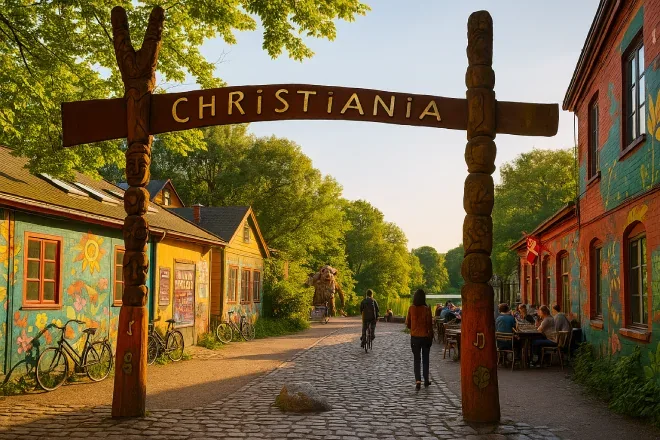
1. What is Christiania, and what's changed since 2024
Christiania is a 7.7-hectare, car-free neighbourhood inside Christianshavn where close to 1,000 residents have run their own society, with their own rules and shared infrastructure, since 1971. It began when squatters occupied an abandoned military barracks and declared it a "freetown," and more than five decades later it's still standing, now as a legal landowner rather than a squat, after residents began formally purchasing the land through a foundation structure from 2012 onward.
The biggest recent change is Pusher Street. For decades it was Christiania's infamous open-air cannabis market; after a string of gang-related violence culminated in a fourth shooting death in three years, residents decided enough was enough. On 6 April 2024, Christianites, politicians and supporters gathered by hand, shovels and wheelbarrows and physically dug up the street's cobblestones to shut the trade down for good. What's risen in its place is genuinely unexpected: each winter since, the former Pusher Street becomes a public ice rink.
This guide ranks the 10 things actually worth your time in Christiania today, with the practical rules, hours and prices you need. For where Christiania fits into Copenhagen's wider alternative and social scene, see my separate guide to Copenhagen's alternative spaces, which covers Reffen, Warehouse9 and more than a dozen other venues alongside it.
The Ranking
2. The 10 best things to do in Christiania, ranked
Ranked on how distinctly Christiania each experience feels, and how it holds up after the 2024 changes to Pusher Street. Tap a name to open it directly in Google Maps.
The Winter Ice Rink on Former Pusher Street
A 660 m² skating rink, built where cannabis stalls once stoodThis is the single most striking thing in Christiania right now. After residents dug up Pusher Street's cobblestones by hand in April 2024, a 660 m² ice rink rose in their place, along with a 120-metre skateway winding past landmarks like Nemoland and Woodstock Café. The rink is decorated with work by graffiti artist Rasmus Balstrøm and wrapped in strings of Christmas lights, and watching families glide where dealers once stood is genuinely surreal.
- Season: Late November to early January (recently open 22 Nov–4 Jan); check for the current year's dates before visiting
- Price: Free with your own skates; skate rental roughly 75 DKK
- Location: Former Pusher Street, main entrance area
Tip: Visit on a weekday evening when the Christmas lights are on but the rink is quieter, it's the best time to appreciate how much this space has genuinely transformed.
Guided Walking Tours with Residents
The single best way to actually understand the place, straight from people who live thereTours led by Christiania residents cover the community's founding in 1971, the 2024 Pusher Street transformation, and the day-to-day reality of self-governance, in a way no guidebook or plaque ever could. It's a 60 to 90-minute walk starting at the main entrance on Prinsessegade, and it's genuinely the fastest way to understand the etiquette before you wander off on your own.
- Schedule: Daily at 3:00 PM (late June–August); weekends at 3:00 PM the rest of the year
- Price: Around 60 DKK cash, paid directly to the guide
- Meeting point: Main entrance on Prinsessegade
Tip: Take this tour on your first visit, even if you plan to come back later on your own. It's the single best investment of 60 DKK in this entire guide.
Christmas Market at Den Grå Hal
Running since the 1970s, one of Denmark's most authentic Christmas marketsDen Grå Hal, a converted former riding hall, hosts a Christmas market that's been running in some form since the 1970s, with handmade crafts, organic treats and local art under strings of chandeliers rather than the polished, corporate stalls you'll find elsewhere in the city.
- When: December weekends (late November through December)
- Entry: Free
- Location: Den Grå Hal, central Christiania
Tip: Combine this with the ice rink next door for a full winter afternoon, they run during overlapping weeks.
Christiania Bryghus
Copenhagen's only hemp brewery, with a surprisingly clean, hoppy pilsnerEvery beer brewed here contains hemp, yes, genuinely, and the flagship Super Nova pilsner is fresh and hoppy rather than the novelty you might expect. It's a small, essential stop for anyone exploring Copenhagen's craft beer scene who wants something the city centre simply doesn't offer.
- Beer prices: Roughly 20–40 DKK
- Must-try: Super Nova pilsner
- Official website
Tip: Pair a beer here with a walk to Nemoland, they're a short stroll apart.
Nemoland & Live Music at Loppen
Christiania's outdoor social hub, and its own concert venue since the early daysNemoland is an open-air hangout of picnic tables and a bar serving Christiania's own beer, drawing an eclectic mix of backpackers, locals and curious wanderers, and it's especially lively on Sunday afternoons when free concerts start around 6 PM in summer. Loppen, tucked into an old warehouse nearby, has been running gigs since the free town's early days, doom metal one night, jazz the next, with a rawer sound than the city's mainstream venues.
- Nemoland concerts: Sundays from around 6:00 PM in summer
- Loppen tickets: Roughly 50–150 DKK depending on the show
- Official website
Tip: Bring a blanket if you want to sit on the grass at Nemoland, and check Loppen's schedule ahead, some nights sell out.
Badehuset, the Christiania Bathhouse & Sauna
A cosy, wood-fired sauna and bathhouse, operating since 1971Badehuset is Christiania's own communal bathhouse, running continuously since the community's founding year, with a central wood-burning stove heating the sauna room and solar panels topping up the hot water through summer. It's genuinely one of Copenhagen's most atmospheric, least commercial saunas, recently renovated but still laid-back and unpretentious. Nordic bathhouse tradition here means clothing is optional, and walk-ins are welcome most days without booking.
- Hours: Tuesday to Sunday, roughly noon onward; closed Mondays
- Price: Roughly 50–120 DKK depending on day and season, cash is safest
- Note: Clothing-optional, Nordic bathhouse etiquette applies
- Official website
Tip: This is one of the best-value saunas in the entire city, and far less known to tourists than Copenhagen's newer harbourfront sauna operators. Bring cash and a towel.
Christiania Art Gallery
A rainbow-painted building showcasing local artistsInside a building that's a piece of art in itself, local painters and sculptors show work you won't find anywhere else in Copenhagen, and photography is generally welcome here, unlike on the former Pusher Street.
- Entry: Usually free or donation-based
- Photography: Generally allowed
Tip: Ask before photographing individual artists or their work up close, it's a small courtesy that's always appreciated.
ALIS Wonderland Skate Bowl
A world-known indoor skate bowl, built entirely by local skatersHand-built by the skaters who use it, this indoor bowl has an oddly tropical décor, Hawaiian-style paintings and hammocks, that gives it a character no municipal skatepark could ever match.
- Entry: Free
- Note: Sometimes closed after rain, the roof leaks
Tip: Bring your own board, there's no rental on site, and check that it's dry before making the trip.
Lakeside Walk & Green George Sculpture
A quiet escape from the crowds, with a troll made from recycled woodChristiania's small lake area is the calmest corner of the neighbourhood, and Green George, a troll sculpture built from recycled materials by Danish artist Thomas Dambo, delights kids and adults in equal measure. The waterfront atmosphere here connects naturally with the wider Christianshavn canal network just outside Christiania's edges.
- Entry: Free
- Location: Along the lake, eastern side of Christiania
Tip: This is the best spot to bring kids for a break if the rest of the visit feels too intense, it's genuinely peaceful.
Handmade Shopping
Jewellery, clothing and crafts, all genuinely handmade, no mainstream brandsSmall stalls and workshops scattered through the community sell handmade jewellery, clothing and crafts you won't find at any chain store in the city centre, made by the same residents you'll pass on the paths.
- Payment: Cash preferred, many stalls don't take cards
Tip: Bring small bills, and don't expect card machines everywhere, this is still a cash-first community.
Food & Drink
3. Where to eat and drink in Christiania
From cheap eats to a proper sit-down dinner, all within a few minutes' walk of each other.
Budget-friendly
Morgenstedet ("The Morning Place") is a vegetarian and vegan spot in a picturesque courtyard, meals roughly 50–80 DKK, and it opens at noon despite the name. Sunshine Bakery serves pastries, including a cinnamon snegl worth the detour, for 15–30 DKK, and is open close to around the clock. Woodstock Café pours some of the cheapest beer in Christiania, from around 20 DKK, alongside classic Danish smørrebrød for 50–70 DKK.
Mid-range dining
Spiseloppen, upstairs in an old warehouse, serves international fusion cooking from a kitchen staffed by cooks from more than a dozen countries, mains roughly 150–250 DKK, open Tuesday to Saturday, book ahead. Nemoland doubles as a casual food market alongside its bar, with meals around 80–150 DKK and a concert stage that's been running for decades.
Quick Reference
4. At-a-glance comparison
A fast way to match each experience to your visit.
| Experience | Price | When | Best for |
|---|---|---|---|
| Winter ice rink (former Pusher St.) | Free / ~75 DKK skate rental | Late Nov–early Jan | Seeing the biggest recent change |
| Guided walking tour | ~60 DKK cash | Daily 3PM (summer) / weekends | First-time visitors |
| Christmas Market | Free | December weekends | Festive atmosphere |
| Christiania Bryghus | 20–40 DKK/beer | Year-round | Craft beer fans |
| Nemoland / Loppen | Free–150 DKK | Year-round, best Sundays in summer | Live music, social atmosphere |
| Badehuset sauna | ~50–120 DKK | Tue–Sun, from noon | A genuine local wellness experience |
| Art Gallery | Free / donation | Year-round | Photography, local art |
5. Christiania rules: what you need to know in 2026
Christiania isn't a theme park, people live here, and the community asks visitors to follow a short set of rules that have stayed consistent for years:
- No photography on the former Pusher Street or in other clearly marked areas. This is actively enforced.
- Photography is generally welcome elsewhere, including the painted houses and art installations, but always ask before photographing residents or their homes directly.
- Don't run. It's a small rule with a real reason: sudden running has historically triggered panic given the area's past with the drug trade.
- Bring cash. Many stalls, bars and the bathhouse don't accept cards.
- Respect the "no hard drugs" rule. Christiania has always drawn a hard line against hard drugs, even during the years Pusher Street sold cannabis openly.
- Cannabis itself remains illegal under Danish law. Since the April 2024 shutdown of Pusher Street, the open marketplace is gone; small-scale personal use still exists more discreetly in some corners, but it is not sanctioned and police enforcement varies.
Following these isn't complicated, and residents are generally warm and welcoming to visitors who do.
6. Getting there and practical tips
Getting there
Christianshavn Metro station (M1/M2) is a 4-minute walk from the main entrance. Buses 2A, 9A and 37 stop nearby at Sankt Annæ Gade, and it's a 10-minute walk from Nyhavn through the historic centre. Bikes are welcome up to the gates but not ridden inside Christiania itself.
Best times to visit
Weekday afternoons are quietest. Sunday mornings have a peaceful, local-only feel, before Nemoland's Sunday concerts pick up later in the day. Friday and Saturday evenings are liveliest for concerts and events. Avoid rainy days, several venues, including the skate bowl, close when it's wet.
How long to spend here
An hour or two covers the essentials. Three to four hours lets you take the guided tour, eat, and see the art gallery and lakeside area without rushing.
Nearby: Church of Our Saviour
Vor Frelsers Kirke, with its famous spiral exterior staircase, sits just 3 minutes' walk from Christiania. The 400-step climb to the top rewards you with one of the best views in the city, covered in my guide to Copenhagen's churches and historic architecture.
FAQ
7. Christiania Copenhagen: frequently asked questions
The questions I get asked most often, especially since the 2024 changes.
Yes. Since residents dismantled Pusher Street's cannabis market in April 2024, the area has become noticeably calmer and more family-friendly. Use the same common sense you would anywhere: stick to well-used paths and cafés after dark, and follow the community's posted rules.
On 6 April 2024, Christiania residents, alongside politicians and supporters, physically dug up Pusher Street's cobblestones to shut down its open-air cannabis trade after a series of gang-related shootings. The space is now a public walkway that becomes a 660 m² ice rink each winter.
Photography is banned on the former Pusher Street and in other clearly marked areas. Elsewhere in Christiania, including the painted houses and art gallery, photography is generally welcome, but always ask before photographing residents directly.
Badehuset is Christiania's own communal bathhouse and wood-fired sauna, running continuously since the community's founding in 1971. It's open Tuesday to Sunday from around noon, costs roughly 50–120 DKK, and follows clothing-optional Nordic bathhouse etiquette.
The open-air Pusher Street market closed in April 2024. Cannabis remains illegal under Danish law, and while some small-scale, low-key personal use may still occur, it is not an organised or sanctioned marketplace anymore.
Christiania covers 7.7 hectares (19 acres) within Christianshavn and is home to roughly 850–1,000 residents. It was founded on 26 September 1971 and today draws around 500,000 visitors a year, making it Copenhagen's fourth-largest tourist attraction.
Yes. Green George the recycled-wood troll, the lakeside walk and the colourful art make it genuinely enjoyable for families, particularly since Pusher Street's 2024 closure. It's worth explaining beforehand that it's a community with different rules from the rest of the city.
My Local Take
8. Final thoughts: my take
If you only remember one thing from this guide, make it this.
Christiania in 2026 is a genuinely different place than it was even three or four years ago, and I mean that as a compliment. The community chose, on its own terms, to dig up the thing it was most infamous for and replace it with an ice rink that families now skate across in winter. That says something real about the place that no amount of guidebook history ever could.
Take the guided tour first if it's your visit, then wander at your own pace: a beer at Bryghus, a soak at Badehuset, a slow loop past Green George by the lake. Give it two hours minimum, follow the simple rules, and climb the Church of Our Saviour's spiral tower on your way out for the best view of how this whole neighbourhood fits into the rest of Copenhagen.
Join the conversation
Comments
Questions, tips or corrections about this guide? Leave a comment, every comment is checked before it goes live.
Be the first to comment on this guide.
Thanks for your comment!
It's in the queue for review and will appear here once it's approved.