
Copenhagen Heritage Sites & Monuments: 10 Landmarks, Ranked
Copenhagen has more than a dozen significant monuments and heritage sites open to visitors, and cobblestone lanes, copper spires and centuries of royal, maritime and civic history spill into everyday life here rather than staying trapped behind velvet ropes. I'm Felipe, a Copenhagen local guide, and this is my honest, ranked list of the city's best monuments and landmarks, the ones that aren't palaces, churches or museums (I've given those their own dedicated guides), with real hours, prices and the UNESCO facts people ask me about most.
1. How this ranking works
This guide covers Copenhagen's monuments, forts, civic landmarks and heritage squares specifically, the sites that don't fit neatly into a single other category. If you're after the city's royal residences, my palaces and castles guide ranks Rosenborg, Christiansborg, Amalienborg, Kronborg and Frederiksborg in detail. For sacred architecture, see my churches guide, and for Denmark's national collections, my museums guide covers those. Keeping each guide focused means you get real depth on each site rather than a shallow pass over everything at once.
I ranked what's below on historical significance, architectural distinctiveness, the visitor experience today, and how easily each site slots into a day of sightseeing. Prices and hours are current as of August 2026, but Danish museums and monuments do revise these a few times a year, so I've linked the official source where it matters.
The Ranking
2. The 10 best heritage sites & monuments in Copenhagen, ranked
Tap a name to open it directly in Google Maps.
Nyhavn
A perfectly preserved 17th-century harbour of colourful townhouses and wooden shipsNyhavn ("new harbour") was dug by soldiers and prisoners of war in the 1670s to connect the sea to the King's New Square, and today its gabled, candy-coloured facades and moored wooden ships make it Copenhagen's most photographed street. It's genuinely lively, but the maritime history runs deep if you look past the outdoor dining: number 9 on the north side is one of the oldest surviving facades in the row, and Hans Christian Andersen lived at three different addresses along the canal.
- What it is: A 17th-century canal harbour, now a heritage-protected waterfront
- Time to allow: 30-60 minutes
- Cost: Free to walk; canal boat tours run roughly 100-120 DKK
- Nearest station: Kongens Nytorv Metro
- Open Nyhavn in Google Maps
Tip: Walk to the quieter north end past house No. 9 for the oldest facades and far fewer crowds, then loop back for a canal tour, most depart right from the harbour mouth.
The Little Mermaid
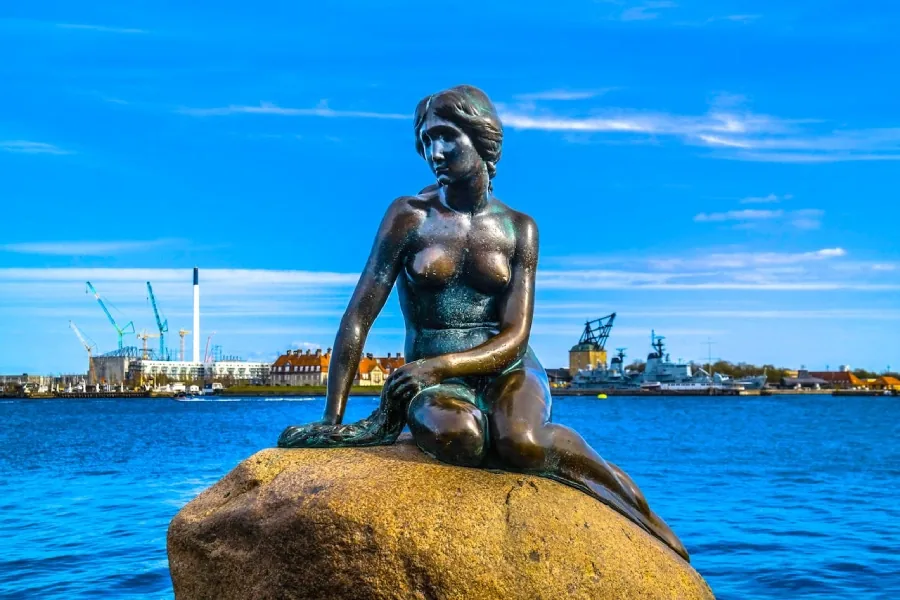
A small bronze statue with an outsized reputation, inspired by Hans Christian AndersenEdvard Eriksen's 1913 bronze, commissioned by Carlsberg brewer Carl Jacobsen after he was moved by a ballet based on Andersen's fairy tale, sits on harbour rocks at Langelinie and remains the single most photographed thing in the city, despite being famously smaller than most visitors expect. It has survived decapitation, dismemberment and paint attacks over the decades and always gets carefully restored, which is part of its charm; Copenhageners are genuinely fond of it.
- What it is: A bronze statue, unveiled 1913, on public harbour rocks
- Time to allow: 15-20 minutes
- Cost: Free, always open
- Nearest station: Østerport, or a 15-minute walk from Nyhavn
- Open the Little Mermaid in Google Maps
Tip: Go right at opening (before 9:00) for a crowd-free photo, and combine it with Kastellet next door rather than treating it as a standalone stop, most visitors otherwise leave underwhelmed by a 20-minute round trip for one photo.
Kastellet, the Citadel
One of Northern Europe's best-preserved star fortresses, still a military area todayBuilt from the 1660s as part of Copenhagen's defensive ring, Kastellet is a five-pointed star fort with grass-topped ramparts, a moat, a working windmill and a small chapel, and it remains an active Danish Ministry of Defence facility even as the public walks its paths freely every day. The ramparts loop is one of the most peaceful short walks in the city centre, and the Little Mermaid sits at its northeastern edge.
- What it is: A 17th-century star-shaped citadel, still active military land
- Hours: Grounds open daily 06:00–22:00; it is still an active military site, so gates can close early
- Cost: Free
- Nearest station: Østerport
- Open Kastellet in Google Maps
- Official website
Tip: Enter from the Little Mermaid side and loop back along the moats for the best light, and pair this with the fuller Kastellet, Langelinie & Nyhavn walking route if you want a complete self-guided loop.
The Round Tower (Rundetårn)
A 1642 observatory with a spiralling ramp instead of stairs, still in scientific useCommissioned by King Christian IV and completed in 1642, the Round Tower is Europe's oldest functioning observatory, and its 209-metre internal ramp winds up in 7.5 turns rather than a staircase, supposedly so a horse-drawn carriage could once reach the top. The viewing platform sits roughly 35 metres above street level and delivers one of the easiest, least strenuous panoramas in the city. It's physically attached to Trinitatis Church, part of the same complex King Christian IV built for astronomy, worship and education together.
- What it is: A 1642 observatory tower with a spiral ramp, part of the Trinitatis complex
- Hours: April–September daily 10:00–20:00; October–March Mon–Tue until 21:00, Wed–Sun until 18:00
- Cost: Around 60 DKK adults, free under 18; free with the Copenhagen Card
- Nearest station: Nørreport
- Open the Round Tower in Google Maps
- Official website
Tip: Go near opening or sunset for the warmest light on the copper roofs below, and glance through the tower's glass viewing window down into Trinitatis Church while you're there, most visitors miss it entirely.
Tivoli Gardens
Opened in 1843, one of the world's oldest amusement parks and a living slice of Danish leisure cultureTivoli predates Disneyland by over a century and is widely credited as an inspiration for it; Walt Disney reportedly visited before designing his own parks. Beyond the roughly 30 rides, it's a heritage pleasure garden with Chinese-inspired pavilions, concert venues, seasonal lantern displays and formal gardens that make it feel more like a historic park than a modern theme park, especially after dark when the lights reflect off the lakes.
- What it is: A heritage amusement park and gardens, opened 1843
- Hours: Seasonal, closed part of January and parts of the year between seasons, check the official calendar
- Cost: Entry from around 180 DKK; ride passes cost extra
- Nearest station: Copenhagen Central Station, right across the street
- Open Tivoli Gardens in Google Maps
- Official website
Tip: Go after dark for the lights on the lakes, it's a genuinely different, more magical park than its daytime version, and it sits right beside Ny Carlsberg Glyptotek if you want to combine the two.
Copenhagen City Hall & Tower
A National Romantic landmark inspired by Siena's town hall, with a 105.6 m towerBuilt between 1892 and 1905 and modelled partly on Siena's Palazzo Pubblico, Copenhagen's City Hall anchors the city's busiest square, Rådhuspladsen, and hides one genuine curiosity inside: Jens Olsen's World Clock, an astronomical clock so precise it's accurate to within half a second every 300 years, still ticking since 1955. Climbing the tower is one of the best free-ish views in the centre, and the forecourt is a great spot to watch Tivoli's lights after dark.
- What it is: Copenhagen's National Romantic-style city hall, built 1892-1905
- Hours: Building open Mon-Fri during business hours; tower tours run at set times most days
- Cost: Building free to enter; tower climb roughly 40 DKK
- Nearest station: Rådhuspladsen, or a 5-minute walk from Central Station
- Open City Hall in Google Maps
Tip: Tower visits are guided and limited to small groups, book ahead in summer. The World Clock is easy to miss, it's tucked in a side room off the main hall, ask staff if you can't find it.
The Gefion Fountain
Copenhagen's largest monument, telling the myth of how the island of Zealand was ploughed from SwedenSculpted by Anders Bundgaard and completed in 1908, this dramatic bronze-and-granite fountain depicts the goddess Gefjun driving four oxen (said to be her sons transformed) as she ploughs the earth that became the island of Zealand, on which Copenhagen sits. It's the city's largest monument, genuinely striking with the spray catching the light, and it sits just a few minutes' walk from both the Little Mermaid and St. Alban's Church, so it's an easy add-on rather than a special trip.
- What it is: A monumental 1908 fountain depicting a Norse creation myth
- Time to allow: 10-15 minutes
- Cost: Free, always visible
- Nearest station: Østerport, in Churchillparken next to Kastellet
- Open the Gefion Fountain in Google Maps
Tip: The water is switched on during the day but not always at night, visit before evening if you want the full effect, and it photographs best from the raised viewpoint on the church side of the park.
Børsen, the Old Stock Exchange
A Dutch Renaissance landmark famed for its twisted four-dragon spire, currently under restorationBuilt in the early 1600s under Christian IV, Børsen is instantly recognisable for its spire of four intertwined dragon tails, said to ward off fire, which makes what happened in April 2024 particularly painful: a major fire tore through the roof and the spire collapsed, destroying roughly half the historic building. Reconstruction is underway using traditional craftsmanship, but there's no confirmed public reopening date yet, so this entry is about appreciating the site and its history from the outside rather than visiting inside.
- What it is: A 17th-century former stock exchange, Dutch Renaissance style
- Status: Closed to the public, restoration ongoing since the April 2024 fire
- Cost: Free to view the exterior
- Nearest station: A short walk from Christiansborg Palace on Slotsholmen
- Open Børsen in Google Maps
Tip: Pair a look at the exterior with Christiansborg Palace right next door, together they tell the story of Christian IV's ambitious city-building vision on Slotsholmen.
Jægersborg Dyrehave & the Hermitage Hunting Lodge
A UNESCO-listed royal hunting landscape with 2,000+ free-roaming deer, just north of the cityThis is the genuine UNESCO answer for anyone asking whether Copenhagen has a World Heritage Site nearby: the Par Force Hunting Landscape, a designed forest of arrow-straight avenues built for 18th-century royal deer hunts, was inscribed by UNESCO in 2015. At its centre, the baroque Eremitageslottet (Hermitage Hunting Lodge), built 1734-36 by royal architect Lauritz de Thurah, crowns an open plain where deer graze right up to the walking paths. It's an easy train ride from the centre and feels a world away from the harbour.
- What it is: A UNESCO World Heritage forest landscape (inscribed 2015) with a 1730s hunting lodge
- Time to allow: 2-3 hours including the walk to the lodge
- Cost: Free; the lodge itself is viewed from outside, it's not open as a museum
- Getting there: S-train to Klampenborg, then a short walk or bike ride
- Open Jægersborg Dyrehave in Google Maps
Tip: Come early on a misty morning, you'll hear the deer moving through the trees before you see them, and it pairs naturally with a stop at Bakken, the world's oldest operating amusement park, right at the edge of the forest.
Dragør Old Town
A heritage-protected 18th-century sea captains' village, a short bus ride from the airportMost visitors never make it here, which is exactly why it's worth the detour. Dragør's old town is a genuinely intact former fishing and sea-trading village, cobbled lanes, yellow-washed captains' houses with thatched or red-tiled roofs, all protected under Danish heritage law since the 1970s. It grew wealthy from herring fishing and shipping in the 18th and 19th centuries, and that prosperity is written into every doorframe and window shutter still standing today.
- What it is: A protected 18th-19th-century fishing and sea-captains' village
- Time to allow: 2-3 hours
- Cost: Free to wander; the small local museum charges a modest entry fee
- Getting there: Bus 350S from the city centre or Copenhagen Airport, about 20-30 minutes
- Open Dragør in Google Maps
Tip: If you have a long layover or an evening flight, this is a genuinely worthwhile way to spend a few free hours near the airport instead of sitting in a terminal.
Quick Reference
3. At-a-glance comparison
A fast way to decide what fits your day.
| Site | Era | Cost | Time needed |
|---|---|---|---|
| Nyhavn | 1670s | Free | 30-60 min |
| The Little Mermaid | 1913 | Free | 15-20 min |
| Kastellet | 1660s | Free | 45-60 min |
| The Round Tower | 1642 | ~40 DKK | 45-60 min |
| Tivoli Gardens | 1843 | ~150-180 DKK | 2-3 h |
| City Hall & Tower | 1892-1905 | Free / ~40 DKK tower | 45-60 min |
| Gefion Fountain | 1908 | Free | 10-15 min |
| Børsen (exterior) | 1600s | Free | 10-15 min |
| Jægersborg Dyrehave | UNESCO 2015 | Free | 2-3 h |
| Dragør Old Town | 1700s-1800s | Free | 2-3 h |
Plan Your Day
4. A perfect 1-day heritage walk
Everything below sits within a compact, walkable area of the city centre.
Morning: towers and squares
Start at the Round Tower near Nørreport, then walk south to Copenhagen City Hall and climb the tower if you've booked ahead.
Midday: harbour and canal
Walk (or take the metro) to Nyhavn for lunch by the canal, then continue toward Kongens Nytorv.
Afternoon: fortress and fable
Head north along the waterfront to Kastellet, loop its ramparts, then finish at the Little Mermaid and the Gefion Fountain, both a short walk apart.
Evening: lights and gardens
Finish at Tivoli Gardens after dark for the lakes lit up, it's the perfect bookend to a day built on 17th-to-20th-century Copenhagen.
Bonus half-day out of town
If the weather's good, swap the evening at Tivoli for a half-day at Jægersborg Dyrehave and the Hermitage Hunting Lodge instead, or head to Dragør's old town if you have an early flight the next morning.
5. Practical tips before you go
Most of this is free
Outdoor monuments, Nyhavn, the Little Mermaid, Kastellet, the Gefion Fountain, Børsen's exterior and Jægersborg Dyrehave, cost nothing to see. Only the Round Tower, Tivoli, and City Hall's tower charge entry, and all are modest by European capital standards.
Distances are friendly
Most of this list clusters within a 20-30 minute walking radius of Kongens Nytorv. Only Jægersborg Dyrehave and Dragør require a short train or bus ride out of the centre.
Weekday mornings are calmer
Nyhavn, the Little Mermaid and Kastellet all feel noticeably calmer before 10:00, especially outside peak cruise-ship season (roughly May to September).
Combine with a guided walk
Everything in this guide sits along or near the routes in my Copenhagen walking routes guide, useful if you want a structured self-guided loop instead of jumping between stops.
Looking for palaces, churches or museums?
Those get their own dedicated, deeper guides: palaces and castles, churches and historic architecture, and must-visit museums.
FAQ
6. Copenhagen monuments & heritage sites: frequently asked questions
The questions I get asked most often about this topic.
The Little Mermaid (Den Lille Havfrue) is Copenhagen's most iconic monument, though most visitors find it smaller than expected. For a more imposing landmark, Kronborg Castle in Helsingør (45 minutes by train) is the region's actual UNESCO World Heritage Site and the inspiration for Shakespeare's Hamlet, covered in my palaces and castles guide.
Copenhagen itself is not a UNESCO World Heritage Site, but the Par Force hunting landscape at Jægersborg Dyrehave, just north of the city, was inscribed in 2015. Kronborg Castle in Helsingør (inscribed 2000) and Roskilde Cathedral, both roughly 30-45 minutes away by train, are the nearest actual UNESCO sites to the capital.
Nyhavn, the Little Mermaid, Kastellet, the Gefion Fountain, Børsen's exterior and Jægersborg Dyrehave are all free. The Round Tower charges a modest entry fee (around 40 DKK), and Tivoli Gardens and City Hall's tower charge for entry too.
Not currently. A major fire in April 2024 destroyed roughly half the historic building and collapsed its famous dragon-spire. Restoration is underway using traditional craftsmanship, but no public reopening date has been confirmed. The exterior remains a striking, free thing to see from Slotsholmen.
One full day comfortably covers the core list, the Round Tower, City Hall, Nyhavn, Kastellet, the Little Mermaid and the Gefion Fountain, since they all sit within a compact, walkable area. Add a half day if you want to include Jægersborg Dyrehave or Dragør's old town as well.
Yes, mostly. Nyhavn, the Round Tower, City Hall, Kastellet, the Little Mermaid and the Gefion Fountain all sit within a 20-30 minute walking radius of central Kongens Nytorv. Jægersborg Dyrehave and Dragør are the two exceptions, both a short train or bus ride from the centre.
My Local Take
7. Final thoughts: my take
If you only remember one thing from this guide, make it this.
Copenhagen's heritage isn't a museum set behind glass, it's lived in, loved and occasionally weather-worn. If you only have half a day, walk Nyhavn, the Round Tower and City Hall in the morning, then Kastellet and the Little Mermaid before sunset, it's the "greatest hits" condensed into roughly 4-5 hours of easy walking.
If you have more time and love landscapes over city streets, Jægersborg Dyrehave is the one genuine surprise on this list, hearing deer rustle through a UNESCO-listed forest feels like a completely different country from the harbour. And if you've got a stopover near the airport, don't waste it in a terminal, Dragør is a five-minute bus ride and a genuinely different side of Danish heritage.
Whichever you pick, take the detour. Copenhagen rewards unhurried curiosity more than almost any capital I know.
Join the conversation
Comments
Questions, tips or corrections about this guide? Leave a comment, every comment is checked before it goes live.
Be the first to comment on this guide.
Thanks for your comment!
It's in the queue for review and will appear here once it's approved.