
Indre By Copenhagen: The Complete Guide to the Historic City Centre (2026)
Indre By is where Copenhagen actually began, and it's still the first place I send anyone visiting for the first time. I'm Felipe, a Copenhagen local guide, and after years of walking these cobblestones I still find something new down a side street I thought I already knew. Here's my honest, ranked guide to Copenhagen's historic centre, Strøget, Nyhavn, the royal palaces and the Latin Quarter, with real prices, hours and a one-day itinerary that actually works.
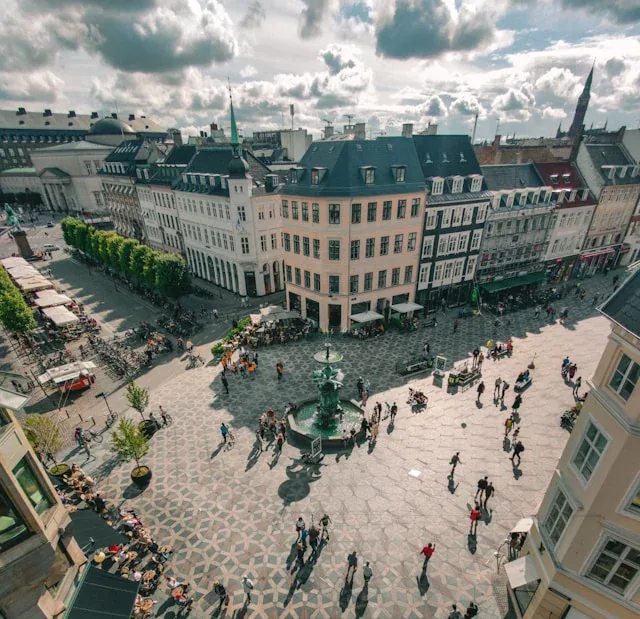
1. What is Indre By, and why start here
Indre By means "Inner City" in Danish, and that's exactly what it is: the compact, roughly circular core that was medieval Copenhagen, still ringed on three sides by the Lakes and the harbour where the old city walls and moats used to run. Locals also call it "City Centre" or the "historic centre," and you'll see it written both ways in English, City Centre and City Center, plus "Inner City" in older guides. It's all the same neighbourhood.
The district dates back to King Christian IV's reign in the early 1600s, when the whole city was fortified, and you can still trace the old ramparts in the zigzag route of the inner Lakes today. Nearly everything most visitors picture when they think of Copenhagen, Nyhavn's colourful houses, Strøget's shopping crowds, the palaces along the harbour, sits inside this one neighbourhood, and almost all of it is within a 25-minute walk from end to end.
This guide ranks the 10 things actually worth your time in Indre By, plus a one-day itinerary, where to eat and where to stay. For the districts just outside it, see my guides to Vesterbro, Nørrebro and Østerbro.
The Ranking
2. The 10 best things to do in Indre By, ranked
Ranked on how essential each stop is to understanding the historic centre, and how well it holds up against the crowds. Tap a name to open it directly in Google Maps.
Christiansborg Palace
The only building in the world housing all three branches of government, built on 800-year-old ruinsChristiansborg sits on Slotsholmen, the small islet where Bishop Absalon built Copenhagen's original fortress around 1167. Today it houses parliament, the Supreme Court and the Royal Reception Rooms all under one roof, and you can walk through the excavated 800-year-old ruins beneath it. It's one of the most complete palaces and castles in Copenhagen.
- Entry: Around 225 DKK for the combined ticket (215 online, covering Reception Rooms, Ruins, Kitchen and Royal Stables); around 150 DKK for the Royal Reception Rooms alone
- Hours: Generally daily 10:00–17:00, with seasonal variations, closed some Mondays outside summer
- The Tower: 106 m, Copenhagen's tallest, and completely free to climb
- Open Christiansborg Palace in Google Maps
- Official website
Tip: Do the tower even if you skip everything else, it's free and gives you the best panoramic view in the city. Book the Reception Rooms online a day or two ahead in high season.
Nyhavn
The candy-coloured 17th-century canal that everyone photographs, and for good reasonNyhavn's townhouses reflecting in the canal water is the single most photographed scene in Copenhagen, and it earns the reputation, especially at sunrise before the crowds and the tour groups arrive. Hans Christian Andersen lived at three different addresses here (No. 20, 67 and 18), marked with plaques. For the full waterfront picture beyond this one canal, see my coastal areas & harbors guide.
- Entry: Free, open 24/7
- Best time: Early morning (7:00–9:00) or sunset in summer
- Open Nyhavn in Google Maps
Tip: The canal-side restaurants charge a real premium for the view, 30–50% more than a few streets over. Grab a beer from a nearby shop and sit on the quay instead, that's what most locals do.
Tivoli Gardens
One of the world's oldest amusement parks, right next to Central StationTivoli opened in 1843 and is still one of Copenhagen's biggest draws, gardens, rides and evening lights all in one gated park in the middle of Indre By. I've covered it in full in my guides to Copenhagen's best urban parks and, if you're visiting in winter, my Copenhagen Christmas markets guide, where it tops the ranking.
- Entry: From around 180 DKK for adults; rides cost extra
- Open Tivoli Gardens in Google Maps
- Official website
Tip: A garden-only visit without rides is entirely worth it, the flowerbeds and pavilion architecture are reason enough.
The Round Tower (Rundetårn)
Europe's oldest functioning observatory, reached by a spiral ramp instead of stairsBuilt in 1642 under Christian IV, the Round Tower has no staircase, instead a 209-metre cobbled ramp spirals 7.5 times around the hollow core, originally so horses could haul equipment to the observatory at the top. It's connected to Trinitatis Church, visible from inside the tower.
- Entry: Around 60 DKK adults, free under 18
- Hours: April–September daily 10:00–20:00; October–March Mon–Tue 10:00–21:00, Wed–Sun 10:00–18:00
- 2026 note: The observatory is undergoing restoration this year, check rundetaarn.dk for any changes to hours or access before visiting
- Open the Round Tower in Google Maps
- Official website
Tip: The glass floor near the top lets you look straight down 25 metres, and there's a traffic-light system to prevent crowding on the ramp. Skip it if narrow, steep final steps are an issue for you.
Rosenborg Castle
A fairytale summer palace holding Denmark's Crown JewelsChristian IV built Rosenborg as his summer palace between 1606 and 1633, and it's kept its Renaissance interiors remarkably intact. The Crown Jewels sit in the basement Treasury, alongside narwhal-tusk thrones and three life-sized silver lions standing guard in the Knights' Hall. Another essential stop among Copenhagen's palaces and castles.
- Entry: Around 140 DKK adults, free under 18
- Hours: Daily 10:00–17:00; 09:00–17:00 in high summer, and Tue–Sun 10:00–16:00 from 2 November to 23 December
- Location: Inside King's Garden, a short walk from Nørreport Station
- Open Rosenborg Castle in Google Maps
- Official website
Tip: Book a timed slot online in advance, in high season it genuinely sells out. Bag size is strictly limited (max roughly 15×23×15 cm), so travel light.
The Little Mermaid
Smaller than you'd expect, but the Langelinie waterfront around it earns the visitThe statue itself is modest, just 1.25 metres, but the walk along Langelinie Promenade to reach it is genuinely lovely and connects into star-shaped Kastellet fortress. It sits close to the edge of Østerbro, and it's covered as part of a full walking route in my best walking routes guide.
- Entry: Free, open 24/7
- Best time: Early morning, before the tour buses arrive
- Open the Little Mermaid in Google Maps
Tip: Combine it with Kastellet and the Gefion Fountain rather than making a separate trip just for the statue.
National Museum of Denmark
Denmark's largest cultural history museum, a few minutes off StrøgetHoused in the 18th-century Prince's Mansion, the National Museum's Viking and prehistoric collections alone justify a visit, and there's enough here for a full afternoon if you're into it. One of the must-visit museums in Copenhagen.
- Entry: Around 150 DKK, free under 18
- Hours: Daily 10:00–17:00 all year, Mondays included
- Open the National Museum in Google Maps
- Official website
Tip: Give it 2–3 hours minimum if you want to see the Viking exhibits properly, it's easy to underestimate how much is inside.
Strøget
Denmark's longest pedestrianised street, and the spine of the whole neighbourhoodStrøget is actually five connected streets running 1.1 km from Rådhuspladsen to Kongens Nytorv, lined with everything from the Georg Jensen flagship to fast fashion. Side streets off Strøget, especially around the Latin Quarter, hide specialty design stores including Paustian's city showroom, plus vintage shops and independent boutiques covered in my Nordic fashion guide.
- Entry: Free, window shopping is unlimited
- Open Strøget in Google Maps
Tip: Prices on the main strip are steep. Duck onto Kompagnistræde, Læderstræde or into the Latin Quarter for better value and far fewer crowds.
Amalienborg Palace
Four identical rococo palaces around an octagonal square, still the royal family's winter homeAmalienborg is the working royal residence, four matching 18th-century palaces facing each other across a cobbled octagonal courtyard with an equestrian statue at its centre. When the flag is flying, the King is home.
- Changing of the Guard: Daily at noon, setting out from Rosenborg at around 11:30
- Nearby: The Marble Church (Frederik's Church), a 5-minute walk
- Open Amalienborg in Google Maps
- Official website
Tip: Time your visit around noon for the Changing of the Guard, and check current museum pricing before you go if you want to see the royal apartments themselves.
King's Garden (Kongens Have)
Denmark's oldest royal garden, and Copenhagen's most-visited parkLaid out in 1606 as Rosenborg's private grounds, King's Garden is where Copenhagen goes to picnic, sunbathe and read in the grass. It ranks #1 in my full guide to Copenhagen's best urban parks and also appears in my lakes & green spaces guide.
- Entry: Free, dawn to dusk
- Open King's Garden in Google Maps
- Official website
Tip: It's the easiest, most pleasant break in the entire neighbourhood, five minutes from Rosenborg with nowhere to be and nothing to pay.
Plan Your Day
3. A perfect 1-day itinerary for Indre By
Everything below sits close enough together to do on foot in a single, unhurried day.
Morning (9:00–12:00)
Start at Christiansborg Palace right when it opens, the free tower is quietest first thing. Walk five minutes to the National Museum for an hour with the Viking collection, then stroll to Nyhavn for photos before the crowds build.
Lunch (12:00–13:30)
Head to Torvehallerne Market for better prices and better food than anywhere in Nyhavn, and grab a coffee at one of the specialty stalls covered in my specialty coffee shops guide.
Afternoon (13:30–17:00)
Climb the Round Tower, wander down Strøget through the Latin Quarter, then take your pre-booked slot at Rosenborg Castle. Finish with an hour lying in the grass at King's Garden.
Evening (17:00–22:00)
Walk the waterfront toward Amalienborg and the Little Mermaid if you have the energy, or head straight into Tivoli Gardens for the evening lights and a proper dinner inside the gates.
Food & Drink
4. Where to eat and drink in Indre By
From cheap eats to a proper splurge, all within a short walk of Strøget.
Budget-friendly
Torvehallerne Market has fresh, local food at far more reasonable prices than the Nyhavn waterfront, covered in depth in my street food & markets guide. Classic Danish pølsevogn hot dog stands are dotted around the centre for a quick, cheap bite, and the bakeries along Strøget are dangerously convenient.
Mid-range
The cafés tucked into the Latin Quarter have a far more local feel than anything on the main strip. For traditional Danish smørrebrød, see my full guide to Copenhagen's traditional Nordic restaurants.
Splurge
Nimb, inside Tivoli, is one of the city's best-known Michelin-recognised dining rooms. Restaurant Schønnemann is a historic smørrebrød institution worth the reservation.
Copenhagen isn't cheap: budget roughly 250–400 DKK per person for a decent sit-down meal with a drink.
Quick Reference
5. At-a-glance comparison
A fast way to plan which stops fit your time and budget.
| Attraction | Price | Hours | Best for |
|---|---|---|---|
| Christiansborg Palace | ~195 DKK combined / tower free | Daily ~10:00–17:00 | History, free panoramic views |
| Nyhavn | Free | 24/7 | Photos, canal-side atmosphere |
| Tivoli Gardens | ~170 DKK | Seasonal, check tivoli.dk | Gardens, rides, evening lights |
| Round Tower | ~40 DKK | Daily 10:00–18:00/20:00 | Views, unique architecture |
| Rosenborg Castle | ~150 DKK | Daily, shorter in winter | Crown Jewels, royal history |
| Little Mermaid | Free | 24/7 | A quick photo stop |
| National Museum | ~150 DKK | Daily / closed Mon in winter | Viking history, rainy days |
| Strøget | Free | Shops ~10:00–18:00/19:00 | Shopping, people-watching |
| Amalienborg Palace | Free to view courtyard | Guard change daily at noon | Royal ceremony, architecture |
| King's Garden | Free | Dawn to dusk | A relaxed break, picnics |
Note: hours, prices and ratings can change, always tap the Google Maps link in each entry above, or the official site, for the latest info before you go.
6. Getting around, money-saving tips & where to stay
Getting around
Walking is the only tool you need, the entire historic centre is flat and covered in my best walking routes guide. On two wheels, Indre By connects onto 390 km of dedicated bike lanes citywide. By metro, the M3 and M4 lines serve Kongens Nytorv and Nørreport stations right inside the neighbourhood. From the airport, the metro takes about 15 minutes to Nørreport.
Money-saving tips
The Copenhagen Card bundles public transport with entry to 80+ attractions across 24- to 120-hour options, it's worth it if you're planning to hit 3 or more paid sights a day; for a slower trip, paying per attraction can work out cheaper. Check current pricing at copenhagencard.com before you decide. Window shopping on Strøget, the Round Tower's traffic-light queueing, and the free Christiansborg Tower cost nothing at all.
Booking strategy
Book Rosenborg Castle and Tivoli (in peak season) in advance, timed slots do sell out. Christiansborg's Reception Rooms, the Round Tower and the National Museum are usually fine to book the same day. Nyhavn, the Little Mermaid and King's Garden never need booking, they're free and open around the clock.
Where to stay
Staying inside Indre By itself puts you within walking distance of everything, at a price. Christianshavn is quieter and still central, just across the harbour. Vesterbro is trendy with strong restaurants, about a 10-minute walk from the centre. Nørrebro offers the best value with a genuinely local food scene. Rough budget guide: 800–1,200 DKK/night for budget, 1,200–2,000 DKK for mid-range, 2,000 DKK+ for luxury.
Accessibility
Nyhavn's promenade, most museums and public transport are fully accessible. The Round Tower's final stretch and Rosenborg's doorways are narrower and more challenging, and some streets are still cobblestone.
FAQ
7. Indre By Copenhagen: frequently asked questions
The questions I get asked most often about the historic centre.
Indre By (literally "Inner City") is Copenhagen's historic city centre and oldest neighbourhood. It includes Strøget (Europe's longest pedestrianised street), Kongens Nytorv (the city's largest square), Nyhavn canal, Tivoli Gardens and the Latin Quarter around the university. Most first-time visitors spend the bulk of their trip here.
Yes, they're the same neighbourhood. "Indre By" is the Danish name, and English guides use "city centre," "city center," "inner city" or "historic centre" interchangeably to describe it. All refer to the same compact district inside the old lake-ring fortifications.
Christiansborg Palace (with its free tower), Nyhavn, Tivoli Gardens, the Round Tower, Rosenborg Castle and the Crown Jewels, the National Museum, Strøget, and Amalienborg Palace. See the full ranked list above for prices and hours.
Yes, Strøget and the surrounding pedestrianised streets are free public spaces, window shopping costs nothing. The street runs 1.1 km from Rådhuspladsen (City Hall Square) to Kongens Nytorv, lined with everything from luxury flagships to fast fashion and Danish design.
The metro's M3 and M4 lines stop at Kongens Nytorv and Nørreport, both inside the neighbourhood. From Copenhagen Airport, it's about a 15-minute metro ride to Nørreport. Once there, everything is walkable.
One full day covers the highlights but feels rushed. Two to three days is comfortable if you want to actually go inside the palaces and museums rather than just walk past them. It rewards slow exploration more than almost any other district in the city.
My Local Take
8. Final thoughts: my take
If you only remember one thing from this guide, make it this.
Indre By is dense enough that you can't really do it wrong. If you only have a few hours, climb the free Christiansborg Tower, walk Strøget to Nyhavn, and call it a day. If you have longer, add Rosenborg's Crown Jewels and an hour doing nothing in King's Garden, that combination alone captures most of what makes this neighbourhood special.
What I'd actually tell a friend: don't treat this as a checklist. Get a little lost down a side street off the Latin Quarter, sit somewhere longer than planned, and save the free Christiansborg Tower for sunset if you can. Eight hundred years of history are still genuinely lived-in here, not preserved behind glass, and that's the part guidebooks tend to undersell.
Join the conversation
Comments
Questions, tips or corrections about this guide? Leave a comment, every comment is checked before it goes live.
Be the first to comment on this guide.
Thanks for your comment!
It's in the queue for review and will appear here once it's approved.