
Best Traditional Nordic Restaurants in Copenhagen: Top 10, Ranked
Copenhagen's traditional Nordic cuisine scene spans smørrebrød at century-old lunch rooms, New Nordic tasting menus, and everything in between. I'm Felipe, a Copenhagen local guide, and after years of eating my way through this city, here's my honest, ranked list of the best Nordic cuisine restaurants, from Noma's legacy to a 300-year-old dining room, with real 2026 prices and the booking windows you actually need.
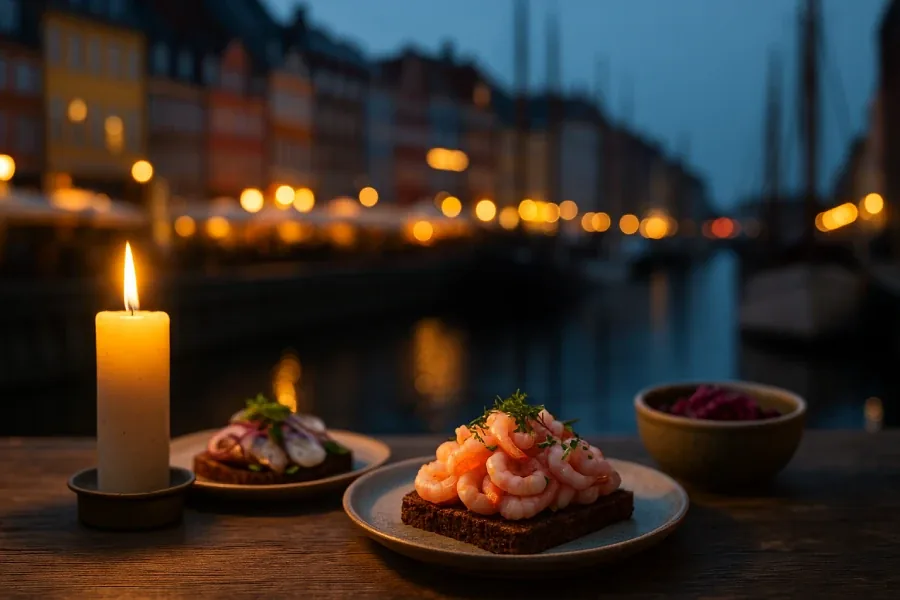
1. What makes Nordic cuisine so special
Copenhagen has completely transformed the culinary world over the past two decades, and living here, I've watched this city evolve into one of the most exciting food destinations on the planet. The New Nordic movement didn't just change how Danes eat, it revolutionised fine dining globally, and its DNA still runs through nearly everything on this list.
The movement officially began in 2004, when twelve chefs, including Noma's René Redzepi, signed the New Nordic Kitchen Manifesto: ten principles built around purity, seasonality, sustainability and a near-spiritual respect for local ingredients. You'll taste it in the sweetness of just-harvested root vegetables, the brininess of that morning's catch, the earthiness of foraged mushrooms. Nordic chefs aren't trying to impress you with 40 ingredients on one plate, they're showing you what happens when three perfect ones get absolute mastery.
This guide ranks the 10 restaurants actually worth booking, from three-star temples to a 300-year-old smørrebrød institution. For the full list of every starred kitchen in the city, see my separate guide to Copenhagen's Michelin-starred restaurants; this one stays focused on Nordic and New Nordic cuisine specifically.
The Ranking
2. The 10 best Nordic cuisine restaurants in Copenhagen, ranked
Ranked on culinary significance, consistency and how well each one represents Nordic cuisine today. Tap a name to open it directly in Google Maps.
Noma
The legend that redefined Nordic cuisine, reopened in August 2026 under new leadershipNoma stays at #1, and as of August 2026 you can book a table again. It closed its old format in 2024 and reopened under a new team, Pablo Soto as executive head chef and Annika de Las Heras as CEO, with René Redzepi stepping back into a creative role. The new rhythm is twelve seasons a year, one per month. Noma won World's 50 Best Restaurants four times and turned foraged herbs, live shrimp and fermented plums into a global culinary language. Redzepi's alumni now run a huge share of Copenhagen's best kitchens, so understanding Noma is really understanding this whole city's food scene.
- Address: Refshalevej 96, Refshaleøen
- Status: Reopened August 2026, new leadership, twelve seasons a year
- Track record: held 3 Michelin stars, World's 50 Best Restaurants winner (2010, 2011, 2012, 2014); not in the 2026 Michelin Guide, having reopened too late in the year to qualify
- Open Noma in Google Maps
- Official website
Tip: Booked out? Chase its DNA instead, Barr (#4 below) sits in Noma's original waterfront building, and half the restaurants on this list are run by Noma alumni.
Kadeau Copenhagen
Island magic in the city, newly promoted to three Michelin stars in June 2026Kadeau brings the wild terroir of Bornholm island straight to Copenhagen, and as of the Michelin Guide Nordic Countries 2026 ceremony (1 June 2026), it now holds three stars, up from two, putting it alongside Geranium and Jordnær as Denmark's only three-star kitchens. The restaurant started on Bornholm in 2007 and opened this Christianshavn location in 2011. Chef and founder Nicolai Nørregaard's team forages and cultivates most ingredients on Bornholm, then transports them daily, so you'll taste figs, mulberries and herbs that shouldn't technically grow this far north.
- Address: Wildersgade 10B, Christianshavn
- Hours: Dinner Mon-Sat from 18:30, Lunch Sat from 12:00
- Michelin: 3 stars (promoted June 2026)
- Tasting menu: Around 3,800-4,000 DKK per person, wine pairing extra
- Open Kadeau Copenhagen in Google Maps
- Official website
Tip: Book the moment a reservation window opens, since the third star, availability has tightened noticeably. Sit at the counter if you can, watching the pass work is half the show.
Höst
Where harvest meets heart, the Nordic dinner I recommend to every first-time visitorHöst (Danish for "harvest") is the restaurant I send friends to when they want a genuinely excellent Nordic experience without the three-star intimidation factor or price tag. Run by the Cofoco group, the room itself is worth the visit: reclaimed wood, soft lighting, that cozy-yet-sophisticated feel that's distinctly Danish. The kitchen leans into bold, seasonal Nordic flavours course after course, and the white glögg (mulled wine made with rum instead of red wine) is a genuinely different way to start the evening.
- Address: Nørre Farimagsgade 41, Nørrebro
- Hours: Dinner daily from 17:30
- Price: 450 DKK (3 courses) / 550 DKK (5 courses); the full "Evening at Höst" package with wine pairing runs around 1,100 DKK
- Open Höst in Google Maps
- Official website
Tip: Book 2-3 weeks out, weekends fill fastest. If you're only splurging on one restaurant in Copenhagen, honestly, make it this one.
Barr
Comfort food elevated, occupying Noma's original waterfront buildingBarr sits inside the North Atlantic House on Copenhagen's waterfront, the exact building where Noma made its name before moving to Refshaleøen, and there's something fitting about that lineage. Where Noma was avant-garde, Barr (opened by Thorsten Schmidt in partnership with René Redzepi) is comforting and nostalgic: think schnitzel, meatballs and pickled herring, but built from serious ingredients and North Sea culinary traditions spanning Scandinavia, the British Isles and the Benelux.
- Address: Strandgade 93, Christianshavn (North Atlantic House)
- Hours: Dinner daily from 17:00, Lunch Fri-Sun from 12:00
- Price: Around 600-800 DKK per person for dinner
- Open Barr in Google Maps
- Official website
Tip: The waterfront terrace is glorious in summer. Book 1-2 weeks ahead, and don't skip the rye bread ice cream.
Restaurant AOC
Intimate excellence, two Michelin stars in a cellar setting in central CopenhagenAOC has held two Michelin stars for roughly a decade and remains one of Copenhagen's most intimate fine dining rooms, tucked into a cellar in central Indre By. Every course is built to engage taste, smell and texture at once, and the wine cellar setting adds real drama without ever feeling stuffy. It's a slower, more theatrical evening than Höst or Barr, plan for 3-4 hours at the table.
- Address: Dronningens Tværgade 2, Indre By
- Hours: Dinner Tuesday-Saturday from 18:30
- Michelin: 2 stars
- Price: Around 2,800-3,500 DKK for the tasting menu
- Open Restaurant AOC in Google Maps
- Official website
Tip: Book 4-6 weeks ahead and dress a notch smarter than at the other restaurants on this list.
Restaurant Palægade
Smørrebrød royalty, rebuilt after a 2020 fire and still one of the city's best lunch roomsPalægade has been chasing the title of Denmark's best smørrebrød since opening in 2016, and after rebuilding following a 2020 fire, it's arguably better than ever. These open-faced rye sandwiches aren't just lunch, they're edible craft, built layer by layer with the same seriousness a fine-dining kitchen brings to a tasting menu. Come evening, the same room shifts into a French-inflected dinner menu.
- Address: Palægade 8, Indre By
- Hours: Lunch daily 11:30-17:00, Dinner Mon-Sat 18:00-24:00
- Price: 150-250 DKK per smørrebrød piece; order 2-3 for a full lunch
- Open Restaurant Palægade in Google Maps
- Official website
Tip: The classic herring and shrimp toppings are the ones to start with. Pair with a Danish beer or a shot of aquavit for the full experience.
Restaurant Selma
Smørrebrød champions, the only smørrebrød kitchen in the city with a Michelin Bib GourmandSelma, chef Magnus Pettersson's modern smørrebrød restaurant, has held a Michelin Bib Gourmand since 2019, the only smørrebrød restaurant in Copenhagen to earn one. The à la carte menu changes daily with the seasons, and each piece is paired well with one of 12 rotating Mikkeller beers on tap. If Palægade is fully booked, or you want a slightly more contemporary spin on the tradition, this is where I send people next.
- Address: Rømersgade 20, Indre By
- Best time: Lunch, the traditional smørrebrød hour
- Michelin: Bib Gourmand (since 2019)
- Price: 150-280 DKK per piece
- Open Restaurant Selma in Google Maps
- Official website
Tip: For a deeper dive into the drinking culture that pairs so well with a smørrebrød lunch, see my guide to traditional Danish pubs.
Marv & Ben
Marrow and bone: a Michelin Bib Gourmand tucked into a medieval Indre By streetThe name translates to "Marrow and Bone," and that no-waste philosophy runs through the whole menu, seasonal New Nordic cooking that changes constantly based on what's actually available that week. Tucked into cobblestoned Snaregade, it holds a Michelin Bib Gourmand and has built a devoted following for making genuinely simple food feel special, technique-driven without ever being fussy about the plating.
- Address: Snaregade 4, Indre By
- Hours: Daily 17:30-01:00
- Michelin: Bib Gourmand
- Price: Around 600-800 DKK per person
- Open Marv & Ben in Google Maps
- Official website
Tip: The menu changes so often that asking the server what's best that day beats picking blind off the printed card.
Vækst
Garden-inspired Nordic cuisine under a two-storey greenhouse in the Latin QuarterAlso part of the Cofoco group (the team behind Höst), Vækst means "growth," and walking in feels exactly like that: plants hanging from a two-storey glass greenhouse that runs through the middle of the restaurant, natural light streaming in even in the depths of a Danish winter. The kitchen leans heavily into vegetables, though it isn't strictly vegetarian, alongside seafood and steak, everything composed with a light, seasonal touch.
- Address: Sankt Peders Stræde 34, Indre By (Latin Quarter)
- Price: 500-700 DKK per person
- Open Vækst in Google Maps
- Official website
Tip: A great lighter-dinner pick after an afternoon exploring the Latin Quarter and the university district around it.
Det Lille Apotek
Copenhagen's oldest restaurant, serving guests continuously since 1720"The Little Pharmacy" has been feeding Copenhagen since 1720, more than 300 years of continuous service, and Hans Christian Andersen was a regular. It's one of the city's genuine historic landmarks, and the menu still leans classic: frikadeller (pork meatballs), roast pork, pickled herring, recipes refined over centuries rather than reinvented every season.
- Address: Store Kannikestræde 15, Indre By
- Hours: Daily 11:30-23:00
- Price: 400-600 DKK per person
- Open Det Lille Apotek in Google Maps
- Official website
Tip: Book a week ahead. Eating here means sitting where Copenhageners have gathered for meals for three centuries, that's worth the reservation.
3. Practical tips for dining in Copenhagen
Booking strategy
Copenhagen restaurants don't really do walk-ins the way other cities do. For three-star spots like Kadeau, think 1-2 months ahead, especially now that Kadeau's third star has tightened availability further. For Höst, AOC or Barr, 2-6 weeks works. Even the smørrebrød lunch rooms appreciate a reservation on weekends.
Price reality check
Yes, Copenhagen is expensive. A 550 DKK tasting menu at Höst offers a quality-to-price ratio that would easily cost double in London or New York. Budget accordingly, but don't let the sticker price scare you off the experience entirely, a smørrebrød lunch is a genuinely affordable way into the same food culture.
Tipping culture
Service is included in Copenhagen restaurant bills. Tipping isn't expected, though rounding up or adding 5-10% for exceptional service is appreciated. Don't feel pressured into American-style 20%.
Dress code
Most restaurants on this list are smart-casual. Even at three-star Kadeau, dress nicely but don't stress about formal wear, Scandinavian style leans toward relaxed elegance over black tie.
Dietary restrictions
Copenhagen kitchens are genuinely excellent with dietary needs, vegetarian, vegan, allergies are all handled professionally. Mention it when booking, then confirm again when you arrive.
Lunch vs. dinner
Several restaurants on this list offer lunch menus at noticeably lower prices than dinner. If budget is tight, a lunch sitting at a fine-dining address is a genuinely smart move, and smørrebrød is a lunch tradition in the first place.
The Bigger Picture
4. Understanding New Nordic cuisine: the philosophy
The 2004 manifesto that still shapes every kitchen on this list.
Ten principles from the New Nordic Kitchen Manifesto guide nearly every restaurant here, in spirit if not by name:
- Purity, freshness, simplicity and ethics define the region's cooking
- Seasons are reflected in every single dish
- Local climates and landscapes inspire the ingredients used
- Health and taste work together, not against each other
- Nordic products and producers are promoted and celebrated
- Animal welfare and sound production practices matter
- Traditional Nordic products find new applications
- Nordic traditions blend openly with international influences
- Local self-sufficiency combines with regional sharing
- Collaboration spans the whole chain, from farmers to policymakers
What that means for you as a diner: every meal here becomes a little more meaningful. You're not just eating dinner, you're tasting a food culture built around sustainability, seasonality and genuine respect for where the ingredients came from.
FAQ
5. Nordic cuisine in Copenhagen: frequently asked questions
The questions I get asked most often about this scene.
The essentials are smørrebrød (open-faced rye bread with herring, roast beef or egg), stegt flæsk (crispy pork belly, often called Denmark's national dish), frikadeller (pork meatballs), æbleskiver (round pancake balls around Christmas), and risalamande (almond rice pudding). For everyday eating, bakeries serving rundstykker (bread rolls) and wienerbrød (Danish pastries) are unmissable.
New Nordic cuisine, pioneered by Noma (which reopened in August 2026 under new leadership), focuses on local and foraged ingredients, fermentation and seasonal Nordic flavours in an experimental, often avant-garde style. Traditional Danish home cooking, smørrebrød, frikadeller, stegt flæsk, is simpler and more homestyle. The New Nordic movement elevated Copenhagen into a global fine dining capital, and many Noma alumni now run their own restaurants across the city.
The Michelin Guide Nordic Countries 2026 awarded Copenhagen 31 stars across 21 restaurants. Geranium, Kadeau Copenhagen and Jordnær hold three stars each, Kadeau was promoted from two to three stars at the June 2026 ceremony. AOC, Alchemist, Kong Hans and Koan hold two stars.
Prices vary enormously. A traditional smørrebrød lunch costs 150-300 DKK per person. Mid-range New Nordic restaurants like Höst or Vækst run 450-800 DKK. Tasting menus at the top three-star kitchens, Kadeau, Geranium, Jordnær, run 3,500-4,400 DKK per person excluding wine. There's an excellent Nordic experience at nearly every price point.
Restaurant Palægade and Restaurant Selma are the two best dedicated smørrebrød lunch rooms in the city, Selma is the only one of the two with a Michelin Bib Gourmand. Det Lille Apotek, Copenhagen's oldest restaurant since 1720, also serves excellent traditional versions alongside other classic Danish dishes.
My Local Take
6. Final thoughts: which restaurant should you choose
If you only remember one thing from this guide, make it this.
If you can only visit one restaurant: make it Höst, the best value and the most complete introduction to Nordic cuisine. If money isn't the concern: Kadeau, now with a third Michelin star, is the surest three-star evening in the city. For a slightly more attainable splurge: Restaurant AOC's two-star cellar experience is genuinely special. For casual excellence: Barr, in Noma's original building, schnitzel and a beer by the water. For the traditional Danish lunch: Selma or Palægade, order smørrebrød, embrace the ritual. For food history: Det Lille Apotek connects you to three centuries of Copenhagen dining.
If I had to pick just three, it'd be Höst for the complete experience, Kadeau for the once-in-a-lifetime occasion, and Selma or Palægade for the everyday ritual that actually built this food culture in the first place. Whatever you choose, come hungry, keep an open mind, and understand that you're tasting centuries of tradition meeting modern obsession with quality. Skål.
Join the conversation
Comments
Questions, tips or corrections about this guide? Leave a comment, every comment is checked before it goes live.
Be the first to comment on this guide.
Thanks for your comment!
It's in the queue for review and will appear here once it's approved.