
Copenhagen Christmas Markets: Dates & Ranking by a Local (2026)
Twinkling lights on cobblestone streets, the smell of cinnamon and roasted almonds, and a mug of hot gløgg in your hands, that's Copenhagen in December. I'm Felipe, a Copenhagen local guide, and I've spent more December evenings than I can count walking these markets end to end. Here's my honest ranking of the city's six best Christmas markets, with real prices, hours and the dates you actually need to plan around.
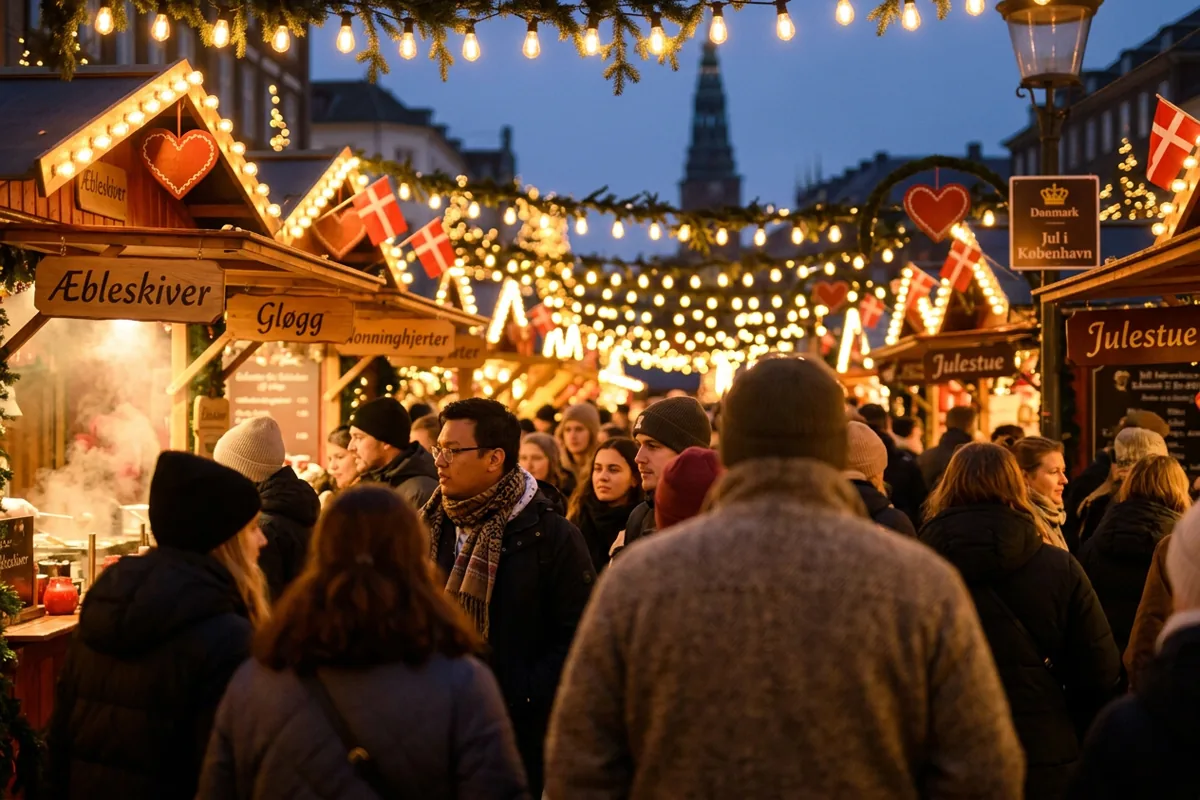
1. Why Copenhagen's Christmas markets feel different
Copenhagen's Christmas markets aren't the sprawling, tour-bus affairs you'll find in Germany or Austria. They're smaller, spread across five or six squares rather than one giant fairground, and genuinely local: on a Tuesday evening you're just as likely to be standing next to a Copenhagen family picking up gløgg on the way home as a visiting tourist.
What ties them together is hygge, the Danish idea of contentment through small, shared comforts. It's less a Christmas-market gimmick here and more the whole point: warm hands around a hot cup, fairy lights reflected in a canal, a stall selling the same roasted almonds it's sold for twenty years. I've walked all six of the markets in this ranking more times than I can count, in the cold, in the rain, and occasionally in real snow, and I've built this guide around what's actually worth your time.
If you want the rest of the city covered by someone who lives here, my private walking tour runs year-round, including through the winter months when the markets are up.
Plan Ahead
2. When to visit: 2026 dates and hours at a glance
Three things are confirmed for 2026, and between them they redraw the map. Tivoli has published 13 November 2026 to 3 January 2027. Højbro Plads, written off as cancelled for most of the year, has a brand new market opening 14 November under a different organiser. And the market that used to run on that square has moved to Rådhuspladsen for 11 to 20 December. The rest follow the same yearly pattern and usually confirm in September or October, so the table shows what is official and what is still the historical window.
| Market | Usual opening | Usual closing | 2026 season |
|---|---|---|---|
| Tivoli Gardens | Mid-November | Early January | 13 Nov 2026 – 3 Jan 2027 (confirmed) |
| Kongens Nytorv (Winter Wonderland) | Mid-November | Early January | Not published yet |
| Nyhavn | Early November | 21 December | Not published yet |
| Højbro Plads | Early November | 21 December | 14 Nov – 20 Dec 2026 (confirmed, new organiser) |
| Rådhuspladsen (the market that left Højbro Plads) | First year at this address | 11 – 20 Dec 2026 (confirmed) | |
| Gammeltorv (H.C. Andersen market) | Mid-November | 20 December | Not published yet |
| Nytorv | Early November | 21 December | Not published yet |
My honest read on timing: the first two weeks of December are the sweet spot, every market on this list is open simultaneously, the lights feel new rather than tired, and you've still got a shot at snow. Weekday evenings after 17:00 are quieter than weekends and the lights look better once it's properly dark, which in Copenhagen in December is by mid-afternoon. Expect temperatures around 0–5°C. Sources for the confirmed dates: Tivoli's own seasons page, kbhjulemarked.dk for the new Højbro Plads market, and julemarked.nu, the organiser that moved its market to Rådhuspladsen.
The Ranking
3. The ranking: Copenhagen's 6 best Christmas markets
Ranked on atmosphere, how much there is to actually do, food and drink quality, and value for what you pay. Tivoli tops the list because it's the only one that's a full evening out rather than a 20-minute wander.
Tivoli Gardens Christmas Market
A full winter-wonderland evening, not just a marketTivoli stops being an amusement park in December and becomes something closer to a Hans Christian Andersen fairy tale lit up from the inside: tens of thousands of ornaments, decorated trees down every path, around 60 market stalls, and rides that keep running through the cold. There's a reason this is the market every other one on this list gets compared to.
It's also the only market here that charges admission, and the only one where the rides, the Christmas market stalls, and a proper sit-down dinner can all happen in the same visit without leaving the gates.
- Location: Vesterbrogade 3, next to Copenhagen Central Station
- Season: Mid-November to early January (closed 24 December)
- Hours: Roughly 11:00–22:00 on weekdays, later on Friday and Saturday
- Entry: From around 180 DKK, higher on the busiest December weekends
- Rides: Paid separately, per ride or with a wristband
- Official website
Tip: Buy your entry ticket online in advance to skip the gate queue, and go after 20:00 on a weekday if you want the lights without the density of a weekend crowd. You're allowed to bring your own food and non-alcoholic drinks in, which nobody tells you.
Kongens Nytorv: Copenhagen Winter Wonderland
A real ice rink, back after 16 years, ringed by Christmas stallsThe old Christmas market on Kongens Nytorv rebuilt itself in 2024 around something better: a roughly 1,300 m² public ice rink circling the square's equestrian statue, with Hotel d'Angleterre lit up behind it in a new theme each year. It's Copenhagen's most elegant square, and this is the only market on this list where you can skate.
The food stalls lean toward proper gastronomy, small plates from nearby restaurants rather than only the classic street-food staples, which makes this the pick if you want to eat well standing up.
- Location: Kongens Nytorv, between Nyhavn and Strøget
- Season: Mid-November to early January
- Ice rink hours: Roughly 10:00–21:00 daily; market stalls keep shorter hours and close Mondays
- Market entry: Free; skating around 70 DKK per hour including skate rental
Tip: The rink genuinely fills up on weekend afternoons, if you want to skate rather than queue for it, go on a weekday morning instead. Even if you skip the skates, walk past after dark just for Hotel d'Angleterre's lighting.
Nyhavn Christmas Market
The most photogenic market in the city, and the most crowdedNyhavn's 17th-century, brightly coloured townhouses dressed in Christmas lights and reflected in the canal are the image most people have of Copenhagen at Christmas before they've even arrived, and it delivers on that image completely. What it doesn't deliver on is space: the canal-side path is narrow, and on weekend evenings it gets genuinely tight.
Prices here run a little higher than elsewhere, which is the trade-off for the location. I'd treat Nyhavn as the market for photos and a first gløgg, then move on to Højbro Plads or Kongens Nytorv for the rest of the evening.
- Location: Nyhavn canal, 5 minutes from Kongens Nytorv
- Season: Early November to 21 December
- Hours: Mon–Wed 11:00–19:00, Thu 11:00–20:00, Fri–Sat 11:00–21:00, Sun 12:00–19:00
- Entry: Free; gløgg and treats 80–100 DKK
Tip: Go right at dusk, the lights against the water look better in that half-hour than at any other time of day. Walk the quieter south side of the canal for the same view with noticeably less foot traffic.
Højbro Plads Christmas Market
Back for 2026 with a new organiser: 14 November to 20 December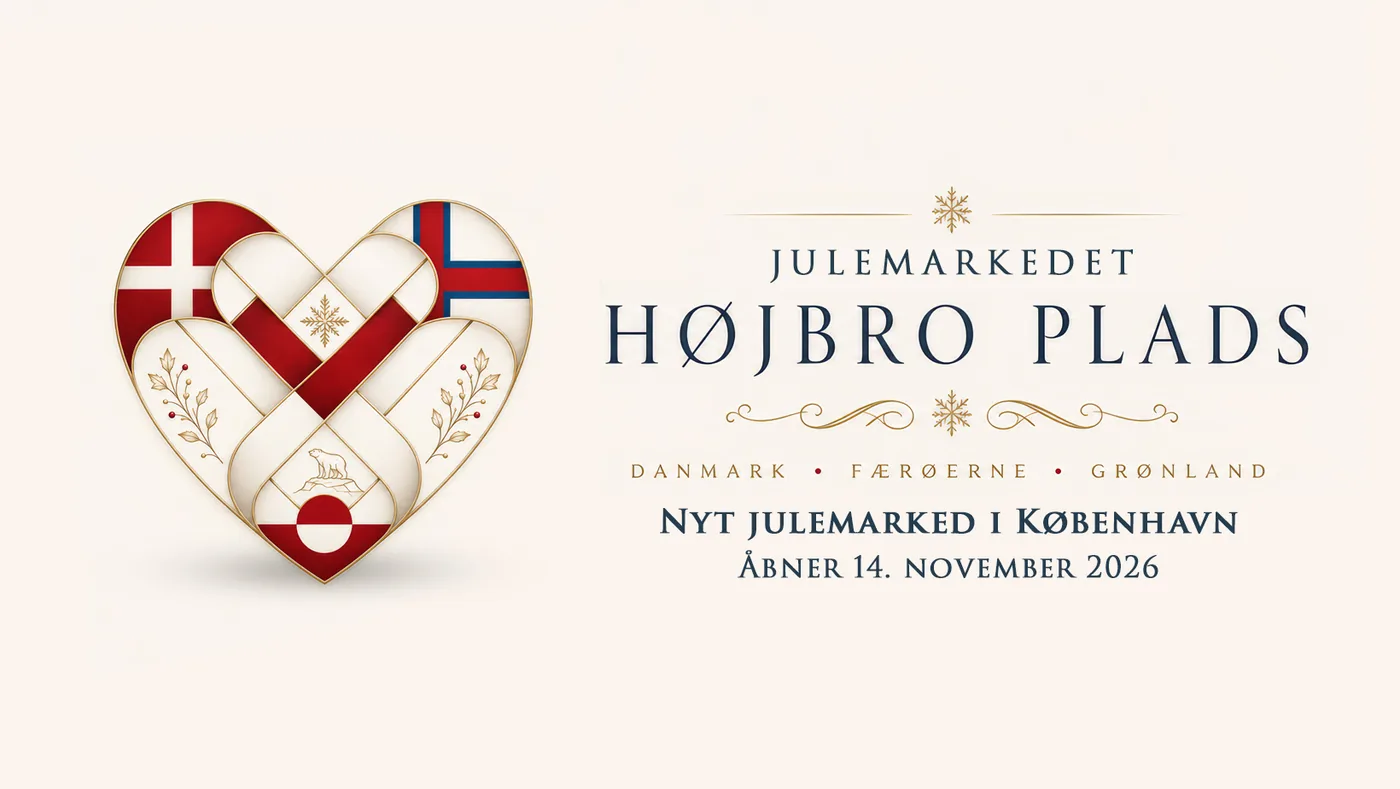
Read this before you plan around it, because this square caused a lot of confusion this year and half the guides out there still have it wrong. Two separate things happened. The market that ran here every winter until 2025 did leave: its organiser moved it to Rådhuspladsen, the Town Hall Square, for 11 to 20 December. But the square itself is not going dark, because a brand new market, Jul på Højbro Plads, opens here on 14 November under a completely different organiser.
What is actually new about it: instead of the usual German-style hut formula, the stalls bring together the whole Danish Realm, so you get Christmas traditions, food, crafts and music from Denmark, Greenland and the Faroe Islands side by side. That is genuinely unusual for a Copenhagen market and it is the reason I would still make the walk. For younger kids there is an interactive Christmas world with talking trees that narrate the tale of Julius Klejne. The dates and hours below come from the organiser's own site.
- Location: Højbro Plads 9, 1200 Copenhagen K, between Strøget and the canal
- Season 2026: 14 November to 20 December 2026 (confirmed)
- Hours: Mon–Wed 11:00–19:00, Thu 11:00–20:00, Fri–Sat 11:00–21:00, Sun 12:00–19:00
- Entry: Free; gløgg, æbleskiver and hot food from 50–150 DKK
Tip: It sits two minutes from Christiansborg's free observation tower and about ten from Nyhavn, so it still slots into the same walk it always did. If it was the old German-style market you were after, that one is now at Rådhuspladsen and only runs the ten days to 20 December, so do not plan it for a November trip.
Gammeltorv: the Hans Christian Andersen Christmas Market
Each stall is named for one of Andersen's fairy talesThe smallest market on this list, and the most charming for it: every wooden cabin is themed around a different Hans Christian Andersen story, and actors playing both Santa and Andersen himself wander the square. It sits right by Vor Frue Domkirke cathedral, one square over from Nytorv.
It won't take you more than 20–30 minutes to see properly, which is exactly why I'd pair it with its neighbour rather than visit alone.
- Location: Gammeltorv, next to Vor Frue Domkirke cathedral
- Season: Mid-November to 20 December
- Hours: Shorter than the others, weighted toward Friday–Sunday; check on the day
- Entry: Free; individual treats 30–80 DKK
- Official website
Tip: Come with kids if you can, watching them meet a costumed "Hans Christian Andersen" is one of the more charming small moments this city does at Christmas.
Nytorv Christmas Market
Newer, smaller, and built around genuinely striking 3D light installationsThis market relocated from Kongens Nytorv to Nytorv in 2025 once the ice rink took over its old spot, and brought its centrepiece with it: large-scale 3D illuminated light displays that cover entire building façades after dark. It's the most design-forward market on this list, better for a striking photo and a browse through artisan goods than a full meal.
Stalls lean toward specialty producers, artisan spirits, coffee and handmade decorations rather than street food, which makes it a good stop for gifts rather than dinner.
- Location: Nytorv, opposite Copenhagen City Court, next to Gammeltorv
- Season: Early November to 21 December
- Hours: Mon–Thu 11:00–19:00, Fri–Sat 11:00–21:00, Sun 12:00–19:00
- Entry: Free
- Official website
Tip: Visit after dark, the 3D installations don't read at all in daylight. It's a two-minute walk from Gammeltorv, do both back to back.
4. What to eat and drink at the markets
The food is genuinely half the reason to come. A handful of dishes show up at every market on this list, and they're worth knowing before you arrive so you're not paying tourist prices for the wrong thing.
Gløgg (Danish mulled wine)
Spiced with cardamom, cinnamon and cloves, served with almonds and raisins settled at the bottom of the cup, and stronger than the German version most visitors expect. Expect 70–100 DKK a cup, and note that most stalls also pour an alcohol-free version if you ask.

Æbleskiver
Round, fluffy pancake balls dusted with icing sugar and served with jam, sold hot in paper bags everywhere from Tivoli to the smallest square. 60–80 DKK for a portion.
Brændte mandler (caramelised almonds)
You'll smell these before you see the stall. Best eaten within a few minutes of being scooped into the bag, while they're still warm. 50–70 DKK.
Rød pølse and flæskesteg
Denmark's classic red hot dog is the quick, savoury option at every market; flæskesteg, Danish roast pork, usually served in a bun with red cabbage and pickles, is the heartier one, mainly found at Rådhuspladsen and Kongens Nytorv. Expect 50–150 DKK depending on which you pick.
Pebernødder
Small, spiced ginger-and-clove cookies sold by the bag, closer to a snack you keep reaching into than a single treat. 40–60 DKK.
Money Matters
5. Budget planner: what a day actually costs
Copenhagen isn't cheap, and the markets don't try to hide it. Here's roughly what a day looks like at three different spending levels, per person.
| Style | What's included | Typical total |
|---|---|---|
| Budget-conscious | Free markets only, 2–3 gløgg, a snack, one light meal | ~500–700 DKK |
| Moderate | Tivoli entry, several drinks and snacks, a proper meal, a small souvenir | ~1,100–1,400 DKK |
| Splurge | Tivoli entry and rides, skating at Kongens Nytorv, multiple meals, gift shopping | ~2,000–2,900 DKK |
Cards are accepted everywhere in Copenhagen and at almost every stall; carrying cash isn't necessary, though a little is useful for the rare cash-only stand. All prices in this guide are in Danish kroner (DKK); at typical exchange rates, 100 DKK is roughly €13–14 or $14–15 USD.
6. Special events not to miss
Sankta Lucia (Santa Lucia), 13 December
A candlelit procession honouring St. Lucia, marked in Copenhagen with choir performances in several of the city's churches and, in some years, a candlelit kayak procession through Nyhavn's canals after dark. Check listings closer to the date for the exact venues each year.
Christmas concerts and performances at Tivoli
Tivoli's Concert Hall runs seasonal Christmas performances through December, ranging from classical concerts to family shows; check tivoli.dk for the specific programme once it's published in the autumn.
Ice skating
Kongens Nytorv's rink is the headline option and free if you bring your own skates. Tivoli also runs its own seasonal skating rink inside the gardens, included with park entry.
7. Practical tips before you go
Dress properly, not fashionably
A warm jacket, scarf, gloves and real boots aren't optional, cobblestones get slippery and December in Copenhagen sits around 0–5°C with real wind chill off the harbour. Thermal layers under everything else make a bigger difference than any single outer layer.
Getting between markets
Nyhavn, Kongens Nytorv and Højbro Plads are all within a 10–15 minute walk of each other in the historic centre, and Gammeltorv, Nytorv and Rådhuspladsen sit within a few minutes of one another just beyond. Only Tivoli needs a separate trip, and it's right beside Copenhagen Central Station, so it slots easily into the same day. For the full rundown of tickets and the City Pass, see my Copenhagen public transport guide.
Shop for things that travel well
Danish design ornaments, hand-knitted items and packaged Danish cookies are the classic market souvenirs that survive the flight home; skip anything requiring refrigeration.
Darkness falls early
Sunset lands around 15:30–16:00 in December, so the "evening" market atmosphere actually starts mid-afternoon. Plan an early dinner or an early market visit rather than assuming you have until 18:00 for daylight.
FAQ
8. Copenhagen Christmas markets: frequently asked questions
The questions I get asked most often about visiting the markets.
Most markets open in the first half of November and run through 21 December, with Tivoli Gardens the exception, staying open into early January. Exact 2026 dates are usually confirmed by each venue in September or October; the pattern above is consistent enough to plan flights and hotels around in the meantime.
Tivoli Gardens, if you want a full evening out with rides, dining and around 60 stalls in one place. If you'd rather stay outdoors and free, Kongens Nytorv's ice rink and Nyhavn are the two I'd send a first-time visitor to next in 2026, with the brand new Højbro Plads market close behind.
Yes, noticeably more than German or Central European markets. Budget roughly 500–700 DKK per person for a low-key day sticking to the free markets, or 1,100 DKK and up if you're adding Tivoli and a proper meal.
Five of the six on this list, Nyhavn, Kongens Nytorv, Højbro Plads, Gammeltorv and Nytorv, have free entry; you only pay for what you eat, drink or buy. Tivoli Gardens is the one paid exception, charging admission at the gate.
Easily. Nyhavn, Kongens Nytorv and Højbro Plads sit within a 10–15 minute walk of each other, and Gammeltorv and Nytorv are two minutes apart on the way. Tivoli, right by Central Station, pairs naturally with an evening visit after seeing the others in daylight.
Yes. Højbro Plads has an interactive Christmas world with talking trees for younger children, Rådhuspladsen keeps Santa on-site with no extra charge across its ten December days, Gammeltorv's fairy-tale theming and costumed Hans Christian Andersen are aimed squarely at kids, and Tivoli's rides and Snow Queen-themed performances round it out for older children.
Dogs on a lead are generally welcome at the free, outdoor markets. Tivoli Gardens is the exception, it has its own pet policy, so check tivoli.dk before bringing one along.
Card is the default everywhere and by far your best option, exchange rates on cash euros at stalls that accept them tend to be poor. You won't need to carry Danish kroner in cash for anything at these markets.
My Local Take
9. Final thoughts: my take
If you only remember one thing from this guide, make it this.
If you only see one market, make it Tivoli: it's the only one that's a genuine evening-long experience rather than a 20-minute wander, and it's the one that actually justifies an admission fee. Add Kongens Nytorv and Højbro Plads next, both free, both within walking distance of each other, and between them you get skating, live music and the best food variety outside Tivoli's gates.
Nyhavn is worth the crowds for photos alone, just don't expect it to be the calmest stop on your evening. And if you've got a spare 20 minutes, Gammeltorv and Nytorv sit right next to each other and cost you nothing extra to add on.
Whichever you pick, come dressed properly, come after dark for the lights, and check each market's site for its confirmed 2026 dates a few weeks before you travel, since exact opening days shift slightly year to year.
Join the conversation
Comments
Questions, tips or corrections about this guide? Leave a comment, every comment is checked before it goes live.
Be the first to comment on this guide.
Thanks for your comment!
It's in the queue for review and will appear here once it's approved.