
Copenhagen's Best Palaces & Castles, Ranked
Copenhagen has 3 central royal palaces plus 2 day-trip castles genuinely worth the journey, and after years of walking through their halls, I still feel a small thrill every time. I'm Felipe, a Copenhagen local guide, and here's my honest, ranked list: where to see the actual Danish Crown Jewels, which building houses an entire country's government under one roof, and why a castle 45 minutes north inspired Shakespeare, with real, current 2026 prices and hours for each.
1. Why visit Copenhagen's palaces and castles
Denmark is home to one of the world's oldest monarchies, and unlike many European palaces that feel distant behind glass barriers, Copenhagen's royal residences have a genuine intimacy: you're walking through rooms where kings signed treaties, queens hosted grand balls, and royal children actually played. This guide covers the five I think are genuinely worth your time and money, all ranked on historical significance, architectural beauty and the visitor experience today.
Looking for something different? My heritage sites and monuments guide covers Copenhagen's forts, statues and civic landmarks, and my churches guide covers the city's sacred architecture in depth.
The Ranking
2. The 5 best palaces & castles in Copenhagen, ranked
Tap a name to open it directly in Google Maps.
Rosenborg Castle
A Renaissance jewel box housing the actual Danish Crown JewelsIf you only have time for one palace, make it this one. Built by Christian IV in the early 1600s, Rosenborg looks like it stepped out of a fairy tale, copper spires, turrets, and underground vaults holding the Danish Crown Jewels, regalia still used by the royal family on state occasions today. The Long Hall on the third floor has three life-size silver lions guarding the coronation thrones, and the Knight's Hall displays 12 tapestries depicting King Christian V's military victories.
- Address: Øster Voldgade 4A, 200 m from Nørreport Station
- Hours: Daily 10:00-17:00, Mondays included; 09:00-17:00 from 27 Jun to 30 Aug; Tue-Sun 10:00-16:00 from 2 Nov to 23 Dec
- Cost: Around 140 DKK adults; free under 18; free with Copenhagen Card
- Time needed: 2-3 hours
- Open Rosenborg Castle in Google Maps
- Official website
Tip: Book online ahead in summer, time slots sell out. Arrive right at opening for the quietest visit, and don't skip the King's Garden (Kongens Have) surrounding the castle, Denmark's oldest royal garden and a lovely spot to sit afterward.
Christiansborg Palace
The only building on Earth housing all three branches of a nation's government, plus royal reception roomsChristiansborg sits on Slotsholmen, where Copenhagen's centre of power has stood for over 800 years. The current 1928 palace houses Parliament, the Supreme Court and the Prime Minister's office, while the royal family still uses it for state functions. Beneath it lie the actual ruins of Bishop Absalon's 1167 castle, open to explore, and the Great Hall's 17 tapestries, commissioned for Queen Margrethe II's 50th birthday, depict a thousand years of Danish history. The tower is free to climb and gives the best panoramic view in the city centre.
- Address: Slotsholmen, a short walk from Kongens Nytorv
- Hours: Daily 10:00-17:00 in summer (longer in July-Aug), Tue-Sun in winter
- Cost: Royal Reception Rooms only ~150 DKK (140 online); combined ticket (rooms, ruins, kitchens, stables) ~225 DKK (215 online); tower always free
- Time needed: 3-4 hours for everything
- Open Christiansborg Palace in Google Maps
- Official website
Tip: Get the combined ticket, it's better value than paying for sections separately. A free English guided tour of the Reception Rooms typically runs daily around 15:00, and the tower is free regardless of what else you book, go on a clear day for views across to Sweden.
Amalienborg Palace
The royal family's actual winter home, with the Changing of the Guard daily at noonAmalienborg isn't a museum first, it's where the Danish royal family lives during winter; when the flag flies over the palace, King Frederik X and Queen Mary are home. Four identical rococo palaces ring an octagonal courtyard around an equestrian statue of Frederik V, one of Europe's finest rococo ensembles. Christian VIII's Palace houses a museum of royal private apartments from the last 150 years, including the Fabergé Chamber's Russian jewellery, but the real draw is watching the guard march in from Rosenborg at 11:30 and arrive here at noon sharp, daily, rain or shine.
- Address: Amalienborg Slotsplads, near Marmorkirken
- Hours: Tue-Sun, roughly 10:00-16:00 or 17:00 depending on season; check ahead as royal events can affect access
- Cost: Museum 135 DKK at the door, 125 DKK online; the palace square and the Changing of the Guard are always free
- Time needed: 1-2 hours, plus 30 minutes for the guard ceremony
- Open Amalienborg Palace in Google Maps
- Official website
Tip: Arrive by 11:45 to get a good spot for the Changing of the Guard. The fullest ceremonies, with the royal orchestra, happen roughly September through April when the family is in residence. Marmorkirken is right across the street if you want to combine the two.
Kronborg Castle (Hamlet's Castle)
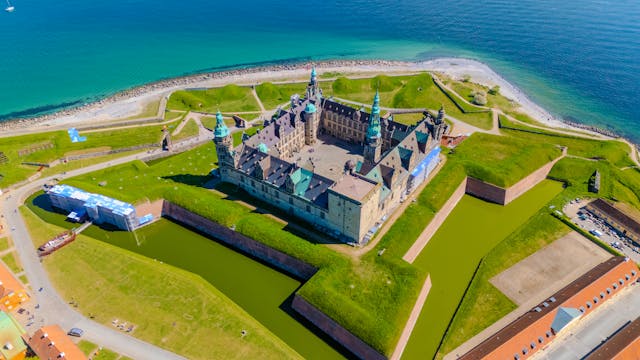
Denmark's UNESCO World Heritage castle, the setting for Shakespeare's HamletA 45-minute train ride north in Helsingør, Kronborg has stood on the Øresund strait since 1574, close enough to Sweden that it once collected tolls from every ship passing through the sound. UNESCO-listed since 2000, it's famous worldwide as Elsinore, the setting of Hamlet, even though Shakespeare himself likely never visited. The ballroom stretches nearly 60 metres, one of Northern Europe's largest, and the underground casemates hide a statue of Holger Danske, the legendary Danish hero said to wake when the country needs him. Summer brings open-air Hamlet performances in the courtyard.
- Address: Kronborg, Helsingør, 45 min by train from Copenhagen Central Station
- Hours: Daily 10:00-17:00, Mondays included
- Cost: 150 DKK adults (135 DKK online); free under 18; free with Copenhagen Card
- Time needed: Half a day including travel, 2-3 hours at the castle
- Open Kronborg Castle in Google Maps
- Official website
Tip: The castle grounds are free to wander even without a ticket, but the interior is worth paying for. Combine with lunch at Værftets Madmarked, a street food market about 10 minutes' walk away, and check ahead if you want to catch a summer Hamlet performance.
Frederiksborg Castle
Denmark's largest Renaissance castle, often called the "Versailles of Denmark"Built by Christian IV between 1600 and 1620 in Hillerød, about 40 minutes from Copenhagen, Frederiksborg sits on three small islands in a lake, its reflection genuinely postcard-perfect. After a devastating 1859 fire, Carlsberg founder J.C. Jacobsen funded its restoration into the Museum of National History, tracing 500 years of Denmark through portraits and artefacts. The Castle Chapel survived the fire intact and is still used for royal anointments; the Baroque Garden's boxwood-hedge monograms are a masterpiece of symmetry, and a summer ferry crosses the lake for the best photos.
- Address: Hillerød, 40 min by S-train (Line A) from Copenhagen
- Hours: Daily 10:00-17:00 all year, Mondays included
- Cost: Around 125 DKK adults, 105 DKK students/seniors; free under 18; free with Copenhagen Card
- Time needed: Half a day, 2-3 hours at the castle and gardens
- Open Frederiksborg Castle in Google Maps
- Official website
Tip: Walk the 15-20 minutes from Hillerød station through the old town rather than taking the bus, it's a lovely approach with your first glimpses of the towers along the way. The gardens are free to wander even without a museum ticket.
Quick Reference
3. At-a-glance comparison
A fast way to decide what fits your day.
| Palace/Castle | Location | Adult price | Time needed | Best for |
|---|---|---|---|---|
| Rosenborg Castle | City centre | ~140 DKK | 2-3 h | Crown Jewels, compact grandeur |
| Christiansborg Palace | Slotsholmen | ~105-175 DKK | 3-4 h | Political history, variety, free tower |
| Amalienborg Palace | City centre | ~125 DKK | 1-2 h | Living royalty, Changing of the Guard |
| Kronborg Castle | Helsingør (45 min) | ~145 DKK | Half day | Shakespeare, UNESCO, strategic fortress |
| Frederiksborg Castle | Hillerød (40 min) | ~115 DKK | Half day | Renaissance architecture, gardens |
All children under 18 enter free at every site above, and all five are free with the Copenhagen Card.
Plan Your Visit
4. Sample itineraries
Group the three central palaces together, and treat the two castles as separate half-day trips.
One-day palace intensive
Morning: Rosenborg Castle. Late morning: walk through the King's Garden to Amalienborg. Noon: watch the Changing of the Guard. Afternoon: Amalienborg Museum, then Christiansborg Palace. Evening: free sunset views from the Christiansborg Tower.
Two-day royal experience
Day 1: the three central Copenhagen palaces. Day 2: a day trip to either Kronborg or Frederiksborg, with time to explore the surrounding town.
Three-day castle completist
Day 1: Rosenborg and Amalienborg with the Changing of the Guard. Day 2: Christiansborg, including the tower climb and the medieval ruins. Day 3: morning at Kronborg, afternoon at Frederiksborg, both are on the same general train line north.
Is the Copenhagen Card worth it?
If you're visiting three or more of these sites, likely yes. Individual adult tickets for all five above run roughly 620 DKK combined (using the Christiansborg combined ticket), while a 24-hour Copenhagen Card costs around 589 DKK and also includes unlimited public transport plus 80+ other attractions. The card's value climbs fast the more sites and transit rides you stack into a single day; for a slower multi-day trip, compare the 48-hour (~859 DKK) or 72-hour (~1,039 DKK) options against what you'd actually pay separately.
5. Practical tips before you go
Best time to visit
Summer (June-August) has the longest hours and best weather, but also the biggest crowds, book Rosenborg online in advance. Shoulder season (April-May, September-October) offers fewer tourists with everything still fully open. Winter (November-March) means shorter hours and some Monday closures, but near-empty halls.
What to wear and bring
Comfortable shoes matter, expect stairs and cobblestones throughout, especially at Rosenborg, which has no elevator. Bring layers, palace interiors and underground areas run cold even in summer.
Bag policies
Most palaces only allow small bags inside. Rosenborg is strict: anything larger than roughly 15 x 23 x 15 cm goes in a locker. Don't plan to visit straight from a hotel checkout with luggage in tow.
Accessibility
Christiansborg has the best accessibility, with lifts to most areas. Rosenborg has no lift and narrow stairs throughout. Amalienborg's museum has both a platform and conventional lift. Kronborg and Frederiksborg, as genuinely historic buildings, have more limited accessibility.
See the Danish royal family
They live at Amalienborg in winter and use Christiansborg for official functions; the Changing of the Guard is your best everyday chance for a glimpse, though privacy is respected. Public events like the King's birthday or the Royal Run offer another chance.
FAQ
6. Copenhagen palaces & castles: frequently asked questions
The questions I get asked most often about this topic.
Adult admission to Rosenborg Castle is around 140 DKK (2026 pricing), which includes access to the Crown Jewels in the treasury vault. Children under 18 enter free, and it's included free with the Copenhagen Card. Always confirm the exact current price on the official Royal Danish Collection site before you go, as museum prices are revised periodically.
Rosenborg is open Tuesday to Sunday, roughly 10:00-17:00, and closed on Mondays outside peak summer, when it opens daily. Hours shift a little by season, so check the official site if you're visiting in autumn or winter.
Rosenborg Castle. It combines the Danish Crown Jewels, compact Renaissance architecture and a beautiful surrounding garden in a single 2-3 hour visit, and it's the most complete "royal Copenhagen" experience in the smallest footprint.
You can visit the three central palaces, Rosenborg, Christiansborg and Amalienborg, in one intensive day, though it's a full day of walking and queuing. Kronborg and Frederiksborg each require a separate half-day trip outside the city.
Yes, Kronborg Castle in Helsingør, 45 minutes north by train, has been a UNESCO World Heritage Site since 2000. It's the castle Shakespeare used as the setting for Hamlet, even though he likely never visited Denmark himself.
Daily at noon, year-round, rain or shine. The Royal Guard marches from Rosenborg Castle at 11:30 through the city centre, arriving at Amalienborg's palace square at exactly 12:00. It's completely free to watch.
My Local Take
7. Final thoughts: my take
If you only remember one thing from this guide, make it this.
Only time for one: Rosenborg, for the Crown Jewels and the garden. History enthusiasts: all three central palaces, to see royal splendour, political power and living royal life in one trip. Architecture lovers: Frederiksborg's Renaissance halls and Baroque gardens are unmatched. Literature fans: Kronborg is a genuine pilgrimage. Families: Christiansborg, with its ruins, stables and free tower climb.
Each one tells a different chapter of Denmark's story: Rosenborg shows royal splendour, Christiansborg reveals political power, Amalienborg lets you peek into modern royal life, Kronborg stands as fortress and literary icon, and Frederiksborg spreads five centuries of national history across one lakeside building. Book ahead, wear good shoes, and prepare to be genuinely enchanted.
Join the conversation
Comments
Questions, tips or corrections about this guide? Leave a comment, every comment is checked before it goes live.
Be the first to comment on this guide.
Thanks for your comment!
It's in the queue for review and will appear here once it's approved.