Best Pubs in Copenhagen: 7 Traditional Danish Bodegas, Ranked
The real soul of Copenhagen doesn't live in its Michelin-starred restaurants, it beats strongest in the smoky, amber-lit corners of a traditional Danish pub, what locals call a "bodega" or, in plain English, a brown bar. I'm Felipe, a Copenhagen local guide, and after countless evenings in these rooms, here's my honest, ranked list of the 7 traditional pubs actually worth your time, with real prices, hours and the mistakes tourists make.
1. What is a Danish bodega, exactly
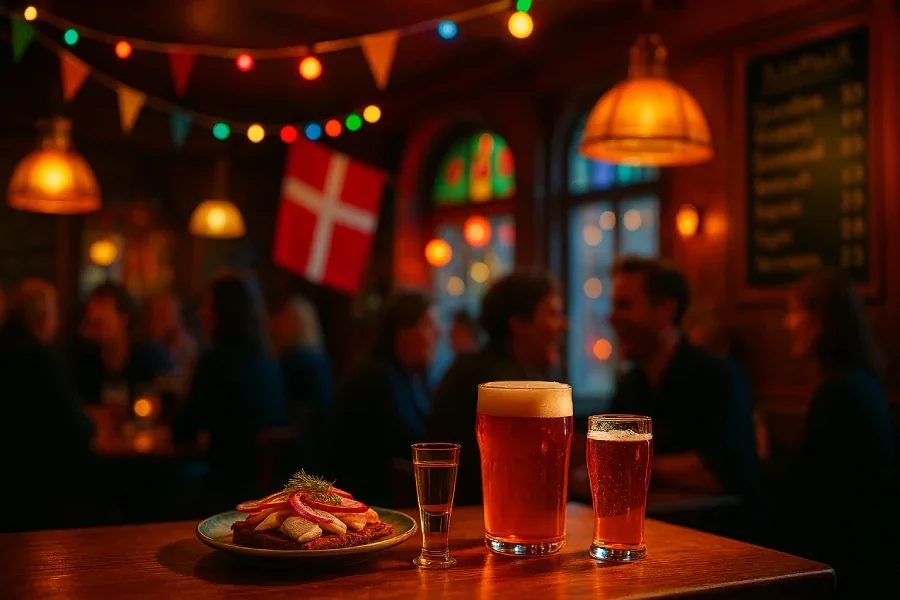
A bodega, sometimes called a "brown bar" in English for its nicotine-stained wood interiors, is Copenhagen's answer to the neighbourhood local: small, unpretentious, and built around regulars who've had the same seat for decades. It's a different creature entirely from the city's cocktail bars and craft breweries, no menu of small-batch IPAs here, just cheap draft beer, aquavit, and simple Danish food served without ceremony.
After countless evenings in these rooms, I've come to think they tell Copenhagen's story better than any museum. And if you're chasing that particularly Danish coziness called hygge, there's genuinely no better place to find it than inside one of these time-honoured bodegas. This guide ranks the 7 that matter most, with real prices, hours and etiquette.
The Ranking
2. The 7 best traditional pubs in Copenhagen, ranked
Ranked on history, atmosphere and how genuinely unchanged each one has stayed. Tap a name to open it directly in Google Maps.
Hviids Vinstue
Copenhagen's oldest pub, established 1723, with a strict no-music policyWalk into Hviids Vinstue and you're stepping into Copenhagen's oldest continuously operating bar, pouring drinks since 1723. It's seen the Great Fire of 1728 and two World Wars come and go. Every 11 November at 11:00 AM sharp, it starts serving its legendary glögg, a recipe unchanged since 1954 that matures for months, and locals genuinely queue for it. The one feature no other pub on this list shares: a strict no-music policy, so the only soundtrack is conversation. It's part of Copenhagen's historic Indre By district.
- Location: Kongens Nytorv 19, Indre By
- Price: Beer from 35-45 DKK
- Best time: Early evening, when locals arrive straight from work
- Open Hviids Vinstue in Google Maps
- Official website
Tip: For the 11 November glögg, arrive before 10:30, locals start queuing then, and the first batch of the day is considered the best.
Cafe Petersborg
The Russian connection, dating back to the 1750s, when St. Petersburg sailors drank hereHistory genuinely seeps from the walls here. Cafe Petersborg dates to the 1750s, when Russian sailors docking nearby would drink in these four intimate rooms with their original wooden rafters. It still runs handwritten bills, a charming detail that's disappeared almost everywhere else in the city, and gets loud and festive during Danish football matches.
- Location: Bredgade 76, Indre By
- Price: Lunch plates 85-150 DKK, beer from 40 DKK
- Hours: Monday-Saturday, roughly 11:00-22:00
- Open Cafe Petersborg in Google Maps
- Official website
Tip: Order the curried herring, seriously, and pair it with an aquavit.
Eiffel Bar
The Christianshavn classic, pouring since 1737, with a genuinely strange Parisian themeDon't let the French name fool you, Eiffel Bar on Wildersgade in Christianshavn is pure bodega. The location has served sailors and locals since 1737, one of the oldest bar addresses in the city, though the current Parisian-themed decor, all cut-glass Eiffel Tower motifs on mirrored walls, came later, and the mismatch somehow works perfectly. It's also one of the last places in Copenhagen where indoor smoking is still legally permitted, allowed for bars under 40 m² without a full food menu. It's steps from Freetown Christiania.
- Location: Wildersgade 58, Christianshavn
- Price: Among the cheapest in the city, roughly 20-50 DKK depending on the hour
- Hours: Daily, roughly 9:00-03:00
- Smoking: Permitted indoors, under Denmark's small-venue exemption
- Open Eiffel Bar in Google Maps
- Official website
Tip: Genuinely one of the cheapest pours in the city, but expect indoor smoking, ask for a table by the door if that's not for you.
Frederik VI
Frederiksberg's unofficial living room since 1973Sitting on the tree-lined Frederiksberg Allé, Frederik VI has been the neighbourhood's living room since 1973, managing to be both a proper pub and a genuinely good lunch spot. The mood shifts naturally through the day, lazy afternoon beers giving way to a livelier evening crowd.
- Location: Frederiksberg Allé, Frederiksberg
- Price: Beer from 40-50 DKK
- Best time: Saturday afternoons
- Open Frederik VI in Google Maps
- Official website
Tip: Ask the bartender about the back garden in summer, most visitors never find it.
Wessels Kro
The theatre pub, over 150 years old, perfectly placed for a pre-show drinkPositioned near the city's main theatre district, Wessels Kro has been pulling pints for well over 150 years, and locals have kept coming for generations rather than leaving it to the pre-theatre crowd. The interior is comfortable and unpretentious, with a solid Danish comfort-food menu worth checking, hence why "Wessels Kro menu" is one of the more common searches for this place.
- Location: Near the theatre district, central Copenhagen
- Price: Beer from 40-45 DKK
- Best time: 17:00-19:00, pre-show
- Open Wessels Kro in Google Maps
- Official website
Tip: Book ahead if you want dinner, it fills up fast right before curtain time nearby.
Alléenberg
The time capsule, unchanged since 1924, complete with a piano for spontaneous singalongsWalking into Alléenberg feels like time travel, nothing has visibly changed since Ingeborg Johannesen furnished it in 1924, including the old piano that still gets played during singalongs in the early hours. This is where Copenhagen drops its composure. It sits within the broader Vesterbro neighbourhood, worth exploring further if you're in the area.
- Location: Vesterbro, Copenhagen
- Price: Budget-friendly, from 35-40 DKK
- Best time: Late evenings, especially weekends
- Open Alléenberg in Google Maps
- Official website
Tip: Bring your singing voice, the piano singalongs are the whole point of a late visit here.
Toga Vinstue
The debate club, where political discussion gets loud and strangers become friendsIf you want to see Danish democracy in its rawest, most opinionated form, this is the place. Toga Vinstue is a classic lunch restaurant by day and a genuine debate club by night, drawing a mixed-age, mixed-background crowd that's increasingly rare in a rapidly modernising city.
- Location: Central Copenhagen
- Price: Beer from 35-40 DKK
- Best time: Evenings after 20:00
- Language: Mostly Danish, but English speakers are warmly welcomed
- Open Toga Vinstue in Google Maps
- Official website
Tip: Don't be shy about joining a table conversation, disagreeing loudly and buying the next round is basically the local custom here.
Quick Reference
3. At-a-glance comparison
A fast way to match each pub to the night you're actually after.
| Pub | Best for | Beer price | Vibe |
|---|---|---|---|
| Hviids Vinstue | History & tradition | 35-45 DKK | Classic & refined |
| Cafe Petersborg | Traditional food | From 40 DKK | Cozy & authentic |
| Eiffel Bar | Budget drinking | From 20 DKK | Quirky & smoky |
| Frederik VI | Lunch & lazy afternoons | 40-50 DKK | Neighbourhood living room |
| Wessels Kro | Pre-theatre drinks | 40-45 DKK | Comfortable & timeless |
| Alléenberg | Late-night singalongs | 35-40 DKK | Time capsule |
| Toga Vinstue | Political debate | 35-40 DKK | Intellectual & lively |
4. Essential tips for visiting traditional Danish bodegas
Timing is everything
Early evening (17:00-19:00) is the golden hour, you'll catch the after-work crowd at its most authentic. Late nights get rowdier, especially Friday and Saturday.
Ordering etiquette
Most bodegas run on an order-at-the-bar system. Table service exists but isn't the norm. Tipping isn't expected, though rounding up is appreciated.
Language matters, but not how you'd think
Everyone speaks English, but a confident "Skål!" (cheers) or "Tak" (thanks) goes a long way. Locals appreciate the effort even with imperfect pronunciation.
The smoking situation
A handful of bodegas, Eiffel Bar among them, still allow indoor smoking under a Danish exemption for small venues without a full food menu. If you'd rather avoid smoke entirely, Hviids Vinstue and Frederik VI are both smoke-free.
What to eat and drink
Beyond beer, the non-negotiables: smørrebrød (open-faced sandwiches), best at Hviids Vinstue and Cafe Petersborg. Frikadeller, Danish meatballs, at their finest at Frederik VI. Snaps/aquavit, served ice cold, mandatory alongside herring. And when in doubt, drink local: Carlsberg or Tuborg. If you want to explore the craft side of Danish brewing too, my guide to Copenhagen's local breweries is a natural next stop.
Plan Your Evening
5. The perfect traditional pub crawl route
Five stops, one honest evening of Copenhagen's bodega culture.
16:00 - Start at Hviids Vinstue for history, afternoon light and smørrebrød.
17:30 - Move to Cafe Petersborg for an early dinner, try the curried herring.
19:00 - Head to Wessels Kro for post-dinner drinks near the theatres.
20:30 - Continue to Frederik VI for the evening neighbourhood crowd.
22:00 - End at Eiffel Bar in Christianshavn for late-night bodega atmosphere.
FAQ
6. Traditional Danish pubs: frequently asked questions
The questions I get asked most often about bodega culture.
A bodega, sometimes called a "brown bar" in English, is a traditional Danish neighbourhood pub: small, unpretentious, serving cheap draft Carlsberg or Tuborg alongside simple food. Bodegas are community gathering places, regulars often have their own seat and regular round. They open early, some from 8 AM, and close late.
Hviids Vinstue on Kongens Nytorv, open continuously since 1723, is Copenhagen's oldest bar. Eiffel Bar in Christianshavn and Cafe Petersborg both have bar traditions dating to the 1730s-1750s, though under different names and decor than today.
Vesterbro and Nørrebro have the heaviest concentration of authentic bodegas, away from the tourist centre, Istedgade in Vesterbro has several classics. In the city centre, Hviids Vinstue on Kongens Nytorv is one of the most atmospheric, dating to 1723.
The classic order is "snaps og øl", a shot of aquavit chased with a cold draft Carlsberg or Tuborg. Gammel Dansk, a bitter liqueur, is a traditional morning or aperitif drink for many Danes. For food, smørrebrød (open-faced sandwiches) or leverpostej (liver pâté) on rye bread are the authentic choices.
Yes, in a limited way. Danish law allows indoor smoking in small bars under 40 m² that hold a liquor licence and don't serve a full food menu. Eiffel Bar in Christianshavn is a well-known example. Most bars and all restaurants are smoke-free.
My Local Take
7. Final thoughts: my take
If you only remember one thing from this guide, make it this.
Copenhagen's bodega culture is quietly disappearing, another one closes most years to make room for a cocktail bar or a coffee shop. These seven represent the best of what's left, each one a small institution worth protecting. If you only visit one, make it Hviids Vinstue for the history and the no-music rule. If you want the rawest, most unpolished version, go to Eiffel Bar or Alléenberg instead.
Skip the trendy rooftop bar for one evening. Walk into one of these instead, order a beer, strike up a conversation, maybe join a singalong. The best travel experiences rarely happen in places designed for tourists, they happen in the corners where locals have been gathering for generations. Skål.
Join the conversation
Comments
Questions, tips or corrections about this guide? Leave a comment, every comment is checked before it goes live.
Be the first to comment on this guide.
Thanks for your comment!
It's in the queue for review and will appear here once it's approved.