
Copenhagen's Best Alternative & Social Spaces: 15 Unique Venues You Won't Find in Guidebooks
Christiania and Kødbyen get the headlines, but Copenhagen's real alternative scene runs from Nørrebro's volunteer-run venues to Vesterbro's underground galleries, with entry that's often free and a crowd that cares more about community than commercialism. I'm Felipe, a Copenhagen local for over five years: here's my honest guide to the 15 alternative venues and social spaces that show a side of this city most visitors never see.
1. Why Copenhagen's alternative scene matters
Listen, I've spent the last five years exploring every corner of Copenhagen, and I can tell you right now: if you're only hitting the tourist spots, you're missing the real magic. The city's alternative cultural spaces are where Copenhagen truly comes alive, where creativity meets community, and where you'll find experiences you won't forget.
After countless nights, lazy afternoons, and spontaneous adventures in these places, I've put together this guide to help you discover the Copenhagen that most visitors never see. These aren't just venues, they're living, breathing spaces that define what makes this city so special.
Before we dive in, let me paint you a picture. Copenhagen isn't just about pretty canals and expensive restaurants. The heart of this city beats strongest in its alternative spaces, places built by communities, sustained by passion, and filled with the kind of authentic experiences that you simply can't manufacture. This scene runs deep: Copenhagen counts 50+ independent cultural spaces and community centres, concentrated mainly in Nørrebro, Vesterbro and the self-governed community of Christiania.
The truth is that these spaces exist because Copenhageners value creativity, freedom, and community over commercialism. And that's exactly what you'll feel the moment you step into any of these spots. Better yet, many of them are completely free, making Copenhagen's free activity scene one of the richest in Europe for budget-conscious explorers.
Think of this as a map to the city's most unusual, hidden, and downright unique venues, the special social spaces that never make it onto a typical Copenhagen itinerary but end up being what people remember most.
Locals' Ranking
2. The 15 best alternative & social spaces, ranked
Ten spaces make the core ranking below, based on what each actually delivers for a visitor, not which one markets itself loudest. Christiania opens the list, because it's simply unlike anywhere else in the world.
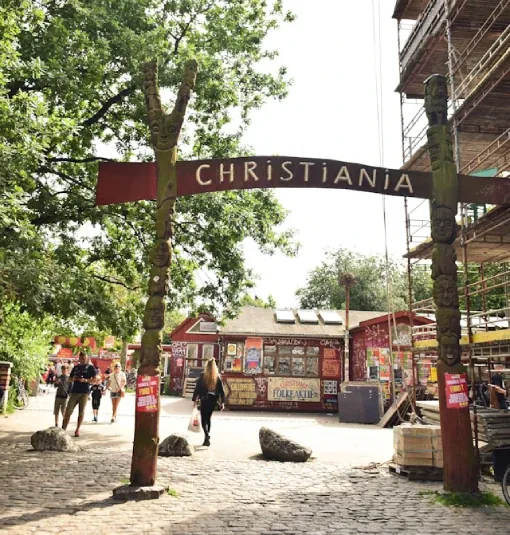
Freetown Christiania
Europe's most famous self-governed community, since 1971This is where I always start with visitors, because honestly, there's nothing else like it anywhere in the world. Imagine a 7.7-hectare autonomous neighbourhood in the middle of a European capital where close to 1,000 free spirits have created their own society since 1971. The colourful houses, wild gardens, and artistic installations tell a story of a community that dared to do things differently: hand-built homes, outdoor cafés serving organic food, and art galleries tucked into unexpected corners.
I remember my first visit. I was skeptical, to be honest. But within minutes, I was captivated by the genuine warmth of the place. The community has faced challenges, sure, but it's survived because people here truly believe in something bigger than themselves. For a deeper dive into the neighbourhood's history and hidden corners, my complete Christiania guide covers everything you need to know before you go. Over 500,000 people discover Christiania each year, making it one of Copenhagen's most visited attractions.
- Location: Christianshavn, Copenhagen
- Entrance fee: Free
- Opening hours: Open 24/7, 365 days a year
- Guided tours: Daily at 3:00 PM from the main entrance (60 DKK cash)
- Best time: Weekend afternoons, when the vibe is most lively
- Important rules: No photos in certain areas, no running, respect the residents
- What to wear: Casual and comfortable, it's all about being yourself
- Food & drink: Several cafés and the famous Nemoland outdoor bar
- Getting there: Metro to Christianshavn, then a 10-minute walk
- Official website
My tip: Take the guided tour if it's your first time. The residents who lead these tours have lived there for decades and share stories you won't find in any guidebook. Also, don't miss Nemoland on Sunday afternoons, especially when they have live concerts starting at 6 PM. The atmosphere is absolutely electric.
Reffen Copenhagen Street Food
Northern Europe's largest street food market, on an industrial waterfrontIf there's one place that captures Copenhagen's current creative energy, it's Reffen. Northern Europe's largest street food market sits on the industrial waterfront of Refshaleøen, and it's become my go-to spot for summer evenings. Picture 35+ food stalls housed in colourful shipping containers, 10 bars, creative workshops, and an on-site brewery, all spread across a massive waterfront space with stunning harbour views. If you want to explore Copenhagen's broader street food scene beyond Refshaleøen, the city has plenty more to offer.
What I love most about Reffen is its diversity. One night you might be eating Korean tacos while watching a DJ set, the next you're sampling Argentinian empanadas at a vintage market. The energy shifts constantly, but it always feels authentic.
- Location: Refshalevej 167A, Refshaleøen
- Entrance fee: Always free, including concerts
- Food stalls: Fri-Sun 11:30-20:30
- Bars: Fri-Sun 11:00-22:30
- Coffee shop: Fri-Sun from 11:00
- Autumn schedule: Weekends in weeks 40-41, daily in week 42, Halloween weekends in weeks 43-44
- Winter: Transforms into Skøjteøen (ice skating) from November 7th
- Payment: Credit cards, cash (DKK), and Reffen gift cards accepted
- Table booking: Available for 8+ people, Mon-Sat 17:00-19:30
- Facilities: Disabled toilets, changing tables, dog-friendly (leashed)
- What to wear: Casual, bring a jacket for evening harbour breezes
- Getting there: Bus 2A to "Refshaleøen" / Harbour Bus 991 or 992 / 4km by bike from the city centre
- Official website
My tip: Come hungry and with an open mind. Don't just stick to one food stall, sharing plates with friends is the way to go. The sunset views from the waterfront are spectacular. If you're visiting with kids, they'll love the play areas, skate park, and table tennis. And yes, the covered Beer Garden is a lifesaver on those unpredictable Danish weather days.
Warehouse9
Raw underground art and performance, with strong queer rootsTucked on the fringes of Copenhagen's meatpacking district, Warehouse9 is where the underground art scene thrives. This tiny performance space and gallery has been challenging boundaries for over a decade. It isn't trying to be polished or mainstream, and that's exactly why it matters: with portable toilets, a makeshift bar, and some of the most boundary-pushing events in the city, this space is raw, real, and unapologetically alternative.
I've been to parties here that I still can't fully describe. The venue focuses on contemporary art, music, and poetry with strong connections to the international queer community. Every event feels like a statement, a conversation, or sometimes a revolution.
- Location: Meatpacking District (Kødbyen), near the White Zone
- Entrance fee: Varies by event
- Opening hours: Event-dependent, check their schedule
- Best time: Weekend evenings for parties and performances
- What to wear: Express yourself, this is a judgment-free zone
- Audience: Primarily LGBTQ+ community and underground art lovers
- Official website
My tip: Follow their social media for event announcements. The venue attracts an international crowd, so don't be shy about striking up conversations. Come with an open mind and leave your expectations at the door. This isn't for everyone, but if you're seeking authentic underground culture, you won't find anything more genuine in Copenhagen.
Cisternerne (The Cisterns)
A former underground reservoir, now a haunting art spaceWhat was once an underground reservoir supplying drinking water to Copenhagen has been transformed into one of the most unique exhibition spaces I've ever experienced. Located beneath Frederiksberg, Cisternerne is where art meets architecture in the most unexpected way. The moment you descend into the darkness, you enter another world: stalactites and stalagmites formed over decades create a mystical backdrop for contemporary art installations. If this sparks your interest in Copenhagen's broader art world, the city's modern art galleries offer another dimension entirely.
I brought my sister here last summer, and she was speechless. The exhibitions change regularly, but the space always maintains its haunting beauty. The combination of natural formations, industrial history, and cutting-edge art creates something truly magical.
- Location: Søndermarken park, Frederiksberg
- Entrance fee: Approx. 80-100 DKK (check current prices online)
- Opening hours: Varies by season, check website before visiting
- Guided tours: Available, highly recommended for first-time visitors
- Duration: Allow 45-60 minutes
- What to wear: Comfortable shoes (floors can be damp), a light jacket (it's cool underground)
- Accessibility: Limited, due to the underground location
- Photography: Usually allowed, no flash
- Official website
My tip: Book tickets online in advance, especially during peak season. The space can feel quite cold, so dress accordingly. Give yourself time to adjust to the darkness and let your eyes adapt. The acoustics are incredible, so if you catch an audio installation or performance, you're in for something special.
Huset KBH
Seven stages, one roof, 1,000+ events a yearWith seven stages, multiple bars, cafés, and a cinema all under one roof, Huset organises over 1,000 events annually. This sprawling cultural centre is where variety truly becomes the spice of life. On any given night, you might find live music on one stage, stand-up comedy on another, an experimental film screening in the cinema, and a poetry slam in the café.
I've probably been to Huset 50+ times, and I've never had the same experience twice. The crowd changes depending on the event, bringing together everyone from students to artists to curious tourists. It's this mix that makes every visit feel fresh.
- Location: Rådhusstræde 13, Central Copenhagen
- Entrance fee: Depends on the event (some free, others ticketed)
- Opening hours: Varies by event and venue within the complex
- Food & drink: Multiple bars and café options on-site
- What to wear: Depends on the event, generally smart casual
- Official website
My tip: Check the event calendar before you go and plan your visit around something that interests you. The café bar is a great spot for pre-show drinks. If you're into comedy, their stand-up nights are consistently excellent. The venue can get packed for popular events, so arrive early.
Bolsjefabrikken (The Candy Factory)
A volunteer-run warehouse, Copenhagen's grassroots heartbeatHoused in an abandoned warehouse and run entirely by volunteers, Bolsjefabrikken is Copenhagen's beating heart of grassroots culture. This is where young artists, musicians, and performers get their start. There's something beautifully raw about a space run by people who simply love what they do: no corporate sponsors, no commercial pressure, just pure creative energy channelled into building something meaningful for the community.
Ludomanic Monday became one of my favourite weekly rituals: café nights where you can play board games, table tennis, and meet some of the most interesting people in Copenhagen. Saturday underground concerts bring local bands that might just be your next favourite discovery.
- Location: Ragnagade 7, Nørrebro
- Entrance fee: Usually free or donation-based
- Ludomanic Monday: Weekly, check social media for exact times
- Regular events: Board games and café nights, Saturday underground concerts, workshops throughout the month
- What to wear: Super casual, come as you are
- Official website
My tip: Follow their social media for event updates (schedules can be fluid). Bring cash for drinks and snacks. The volunteer-run nature means things might not always run perfectly on time, but that's part of the charm. Strike up conversations, everyone here is friendly and passionate about the space.
Vester Vov Vov Cinema
One of Denmark's oldest café-cinemas, fighting to surviveOne of Denmark's oldest café-cinemas, Vester Vov Vov is a charming time capsule showing art films and documentaries that bigger theatres won't touch. Recently restored, it's fighting to keep independent cinema alive in Copenhagen. The foyer café is filled with antique French furniture, creating an atmosphere that modern multiplexes can't touch.
I discovered some of my favourite films here. The intimacy of the space makes every screening feel personal, almost like watching a movie in a friend's elegant living room. The free coffee refills and the outside tables catching the evening sun are lovely bonuses.
- Location: Absalonsgade 5, Vesterbro
- Tickets: Reasonable for independent cinema standards
- Opening hours: Check the screening schedule online
- Café: Serves coffee, tea, beer, and wine
- Special offer: Free coffee refills with every ticket
- Seating: Limited, arrive early for popular screenings
- What to wear: Smart casual
- Official website
My tip: Check the schedule online and book ahead for popular films. Arrive 20 minutes early to grab a coffee in the foyer and soak up the atmosphere. The outside tables are perfect for post-film discussions. Support this gem by bringing friends, it's struggling financially but absolutely worth preserving.
Nemoland
Christiania's outdoor hangout, and a legendary SundayNemoland deserves its own mention, even though it's technically part of Christiania. This outdoor hangout is dotted with picnic tables, potted plants, and an eclectic international mix of alternative souls. The outdoor bar serves Christiania's own beer, and the vibe is unlike anywhere else in Copenhagen: a "human zoo" in the best possible way, where everyone from backpackers to locals to curious wanderers converges.
Sunday afternoons here are legendary. The free live concerts starting at 6 PM on their open-air stage create an atmosphere that's part festival, part community gathering, part spontaneous celebration of life.
- Location: Within Freetown Christiania, Christianshavn
- Entrance fee: Free
- Opening hours: Weather-dependent, best in summer months
- Live music: Sundays from 6 PM (summer season)
- Drinks: Christiania beer and other beverages from the outdoor bar
- What to wear: Casual, bohemian, comfortable
- Official website
My tip: Sunday afternoons are when Nemoland truly shines. Bring a blanket if you want to sit on the grass. The outdoor bar prices are reasonable by Copenhagen standards. Come with an open mind and be ready to meet people from all over the world.
Assistens Cemetery
A cemetery that Copenhageners treat like a parkYes, a cemetery made this list. But Assistens isn't your typical graveyard. Located in vibrant Nørrebro, one of Copenhagen's most culturally layered neighbourhoods, this is where Copenhageners come to read, relax, grill, and yes, even party. Despite being the final resting place of famous Danes including Hans Christian Andersen and Søren Kierkegaard, Assistens functions as a public park, filled with secluded spots perfect for picnics, romantic moments, or simply escaping the city's hustle.
I was skeptical at first, but locals treating a cemetery like a park actually makes perfect sense. It's peaceful without being sombre, beautiful without being ostentatious, and it offers a uniquely Copenhagen approach to life and death.
- Location: Kapelvej 4, Nørrebro
- Entrance fee: Free
- Opening hours: Daylight hours, year-round
- Famous graves: Hans Christian Andersen, Søren Kierkegaard
- What to bring: A blanket, a book, picnic supplies
- Official website
My tip: This might sound strange, but having a beer with friends on a sunny day here is incredibly peaceful. Just be respectful, it's still a functioning cemetery. Spring and summer are obviously best. Bring a map if you want to find specific famous graves. The secluded corners are perfect for reading or quiet contemplation.
Nokken (Amager's Hidden Oasis)
Allotment gardens and hobbit-style huts, worlds from the cityNestled between the harbour and the wild green expanse of Amager Fælled, Nokken is Copenhagen's charming hidden oasis. Think allotment gardens, hobbit-style huts, and an atmosphere that feels worlds away from the city. If you're seeking respite from tourist-packed streets and performative culture, Nokken offers genuine tranquility, especially on warm afternoons.
I stumbled upon Nokken by accident on a bike ride and ended up spending three hours there. The quirky architecture, the community gardens, and the absence of commercial pressure create a space where you can actually breathe.
- Location: Amager Fælled, between the harbour and the nature reserve
- Entrance fee: Free
- Accessible: During daylight hours
- Best time: Spring and summer weekends
- Getting there: 25-minute bike ride from the city centre
- What to bring: A camera, the hobbit-style huts are incredibly photogenic
- Official website
My tip: This is more about the journey than the destination. Cycle here for the full experience. There aren't facilities here, so plan accordingly. It's perfect for a midday break during a longer bike exploration of Amager.
Quick Reference
3. At-a-glance comparison
A fast way to match each space to what you're actually after.
| Space | Best for | Price range | Vibe | Tourist-friendly |
|---|---|---|---|---|
| Christiania | Culture seekers | Free | Counter-culture | Very |
| Reffen | Foodies & families | 50-150 DKK | Vibrant & social | Very |
| Warehouse9 | Underground art lovers | Varies | Edgy & queer | Moderate |
| Cisternerne | Art enthusiasts | 80-100 DKK | Mystical & contemplative | Very |
| Huset KBH | Night owls | Varies | Eclectic & energetic | Very |
| Bolsjefabrikken | Community seekers | Free / donation | DIY & welcoming | Moderate |
| Vester Vov Vov | Film buffs | Moderate | Intimate & nostalgic | Moderate |
| Nemoland | Social butterflies | Cheap | Bohemian & relaxed | Very |
| Assistens | Peace seekers | Free | Tranquil & unique | Moderate |
| Nokken | Nature lovers | Free | Hidden & serene | Low |
4. Essential tips for exploring alternative Copenhagen
Transportation wisdom
Get a bike. Seriously, I can't stress this enough. Copenhagen's alternative spaces are spread across different neighbourhoods, and Copenhagen's world-class bicycle system is the fastest, cheapest, and most authentic way to connect them. Plus, you'll discover hidden gems along the way.
Budget considerations
The beauty of Copenhagen's alternative scene is that many spaces are free or cheap. You can have an incredible day visiting Christiania, Assistens Cemetery, and Nokken without spending a krone on entrance fees. Save your budget for Reffen's amazing food and Huset's shows.
Timing matters
Weekend afternoons and evenings are when most alternative spaces come alive. Summer months (May-September) offer the best weather and most events, but don't discount winter. Cozy indoor spaces like Vester Vov Vov and Huset KBH are magical when it's cold outside.
Cultural sensitivity
These aren't theme parks. Christiania residents live there. Warehouse9's community deserves respect. Follow the rules, be mindful with photos, and remember you're a guest in spaces that mean something to people.
Language
English works almost everywhere, but learning a few Danish phrases shows respect and often opens doors. "Tak" (thanks) goes a long way.
5. The perfect alternative Copenhagen day
Morning (10:00-12:00)
Start with coffee and a wander through Assistens Cemetery. The morning light is beautiful, and you'll have the place mostly to yourself.
Midday (12:00-15:00)
Bike to Reffen for lunch. Grab food from multiple stalls, find a spot by the water, and soak up the atmosphere.
Afternoon (15:00-18:00)
Head to Christiania for the 3 PM guided tour. Afterwards, explore the area and grab a drink at one of the cafés.
Evening (18:00-20:00)
If it's Sunday, catch the free concert at Nemoland. If not, check what's on at Huset KBH or grab an art film at Vester Vov Vov.
Night (20:00+)
End the day with whatever event catches your eye: underground party at Warehouse9, board games at Bolsjefabrikken, or another show at Huset.
Bonus
6. Bonus: the Meatpacking District (Kødbyen)
Not a single venue, but Copenhagen's concentrated alternative culture zone, and worth its own stop.
While not a single venue, the Meatpacking District deserves mention as Copenhagen's concentrated alternative culture zone. This former industrial slaughterhouse area, sitting at the heart of Vesterbro, has transformed into the city's most vibrant nightlife and cultural hub.
What makes it special
The district is divided into three colour-coded zones (White, Grey, and Brown), each with its own character. The area maintains its original industrial architecture while housing art galleries, trendy bars, and gourmet restaurants. The contrast between raw industrial spaces and cutting-edge culture is what gives Kødbyen its edge.
The real experience
I've spent countless Friday nights bouncing between venues here. The beauty of Kødbyen is its density. You can start with dinner at Kødbyens Fiskebar, catch art at a gallery, grab drinks at Jolene bar, and end up dancing at one of the clubs, all within a five-minute walk.
What you'll find here
- Restaurants: From fine dining to casual burger joints
- Bars: Jolene, 1656 Cocktail Bar, and numerous others
- Nightclubs: Including the popular Noaa CPH
- Art galleries: Contemporary spaces showcasing local and international artists
- Warehouse9: Located here on the district's fringes
- Working butchers: Slagter Lund still operates, maintaining the district's meat industry heritage
- Location: Vesterbro district, near Copenhagen Central Station
- Best time: Thursday-Saturday evenings for nightlife
- Opening hours: Varies by venue, most bars and clubs open late afternoon/evening
- Getting there: 10-minute walk from Central Station, well-connected by bike lanes
- Parking: Guest parking available
My tip: The district truly comes alive after 8 PM, especially on weekends. Dress code varies by venue, but generally smart casual works everywhere. Start your evening in the White Zone for dinner, then move to the Grey Zone for bars and clubs. The industrial aesthetic is stunning at night when the buildings are lit up. If you're visiting Warehouse9, you're already in the perfect location to explore the wider district.
7. Month-by-month: when to visit each space
March-May (Spring)
- Reffen opens for the season with new food stalls
- Assistens Cemetery is absolutely beautiful as trees bloom
- Nokken: spring flowers make this the perfect time to visit
- Christiania: guided tours resume more frequently
June-August (Summer)
- All outdoor spaces shine, this is peak season
- Nemoland: Sunday concerts in full swing
- Reffen: extended hours and busiest season
- Kødbyen: outdoor seating everywhere
- Pro tip: book accommodation early, Copenhagen gets packed
September-October (Autumn)
- Reffen: autumn season kicks off in October with special experiences
- Indoor venues take priority: Huset KBH, Vester Vov Vov, Cisternerne
- Warehouse9: party season heats up as students return
- Weather: unpredictable, but the fall colours are gorgeous
November-February (Winter)
- Reffen transforms into Skøjteøen, an ice skating experience
- Cozy indoor spaces shine: Bolsjefabrikken's board game nights, Vester Vov Vov's cinema
- Huset KBH: full winter programme of events
- Kødbyen: thriving nightlife regardless of weather
- Hygge factor: maximum, especially in volunteer-run spaces with candles and warm drinks
8. Insider strategies for every kind of traveller
For solo travellers
Alternative spaces are incredibly welcoming to solo visitors. Bolsjefabrikken's Ludomanic Monday is perfect for meeting people. Christiania guided tours connect you with other travellers. Huset KBH events attract friendly crowds. Don't be shy, Copenhageners and fellow travellers are generally open to conversation.
For couples
Cisternerne offers a uniquely romantic atmosphere. Assistens Cemetery provides intimate spots for quiet conversations. Reffen at sunset is perfect for a casual date. Vester Vov Vov's art films followed by café discussions make for intellectual evenings. Nemoland's Sunday concerts create spontaneous, memorable moments.
For families
Reffen is incredibly family-friendly with play areas, varied food options, and space for kids to run around. Christiania's guided tours educate while entertaining. Assistens Cemetery offers unexpected picnic spots. Most venues welcome children during daytime hours, though evening events at places like Warehouse9 are adult-oriented.
For culture enthusiasts
Create a cultural circuit: morning at Cisternerne, afternoon exploring Christiania's galleries, evening show at Huset KBH, late night at Warehouse9. Copenhagen's compact size makes this entirely feasible. The diverse programming means you'll never run out of interesting events.
For budget travellers
Copenhagen is expensive, but alternative spaces offer real relief: free entry to Christiania, Assistens, and Nokken; donation-based events at Bolsjefabrikken; Reffen's affordable food prices compared to traditional restaurants; free concerts at Nemoland. Strategic planning means incredible experiences without breaking the bank.
9. Safety and practical considerations
Christiania specific
No photos in certain areas, particularly Pusher Street. This rule exists for residents' safety and must be respected absolutely. Don't run (it causes alarm). While generally safe, use common sense, especially at night. The community polices itself, and visitors who respect the rules are welcome.
General safety
Copenhagen is one of Europe's safest cities. Alternative spaces maintain this standard. However, use normal urban precautions, especially late at night in Kødbyen. Keep valuables secure at crowded events. Trust your instincts, if something feels off, it probably is.
Bike safety
Since you'll likely be cycling between venues, follow Copenhagen's bike rules. Use bike lanes exclusively, signal turns, and use lights at night. Bikes can be stolen, so always lock yours properly. Most venues have bike parking nearby.
Weather preparedness
Danish weather is famously unpredictable. Carry a light rain jacket even on sunny days. Layers work better than heavy coats for moving between indoor and outdoor spaces. Comfortable, waterproof shoes are essential, especially for outdoor venues like Reffen and Nokken.
10. Connecting with the community
Social media
Follow these spaces on Instagram and Facebook for event updates. Many announce last-minute concerts, parties, and special happenings. Bolsjefabrikken and Warehouse9 particularly rely on social media for communication.
Volunteering opportunities
Several spaces welcome volunteers. Bolsjefabrikken operates entirely on volunteer power. Christiania occasionally seeks help with specific projects. Volunteering offers deeper insight into how these communities function and creates meaningful connections.
Supporting the spaces
Buy merchandise when available. Attend paid events at venues like Huset KBH and Vester Vov Vov. Donate to Bolsjefabrikken. Leave positive reviews online. Word-of-mouth recommendations help these spaces survive. Small actions from visitors make real differences.
Respecting the ethos
Remember that these aren't tourist attractions designed for your entertainment. They're living communities and cultural projects with deeper purposes. Approach them with curiosity and respect rather than entitlement. Ask questions, engage authentically, and recognise that you're witnessing something special.
11. Beyond the top 15: other spaces worth mentioning
La Fontaine
This tiny music venue in Vesterbro hosts intimate concerts in what feels like someone's living room. Limited capacity means incredible atmosphere but requires advance booking.
Mayhem
Copenhagen's legendary underground metal club. If you're into extreme music, this iconic Nørrebro venue has hosted international metal bands for decades.
Bolsjehuset
Not to be confused with Bolsjefabrikken, this community space focuses on music workshops and youth programmes. Less visitor-oriented but culturally significant.
Ungdomshuset (Youth House)
A politically active autonomous space with a complex history. Events here lean toward punk, activism, and community organising.
Loppen
Christiania's own live-music venue, tucked inside an old warehouse and running gigs since the early days of the free town. Expect a rougher-edged, DIY sound compared to the city's mainstream venues, and a crowd that's there for the music, not the scene.
12. Why these spaces matter, and how they evolved
Here's something I've realised after living here: these alternative spaces aren't just entertainment venues. They're essential to Copenhagen's identity. They provide platforms for artists, gathering places for communities, and spaces where people can express themselves freely.
In a city that can feel expensive and sometimes exclusionary, these venues democratise culture. They prove that meaningful experiences don't require big budgets or fancy credentials, just curiosity, respect, and openness. The fact that spaces like Christiania have survived for over 50 years, that volunteers keep Bolsjefabrikken running, and that Vester Vov Vov fights to screen films that matter, this tells you something fundamental about Copenhagen's values.
These spaces didn't appear overnight. Christiania's founding in 1971 established Copenhagen's tradition of autonomous spaces. The transformation of the Meatpacking District from industrial wasteland to cultural hub demonstrates how the city reimagines itself.
Recent years have seen consolidation and professionalisation. Some spaces have closed (like the original Copenhagen Street Food on Paper Island). Others, like Reffen, have emerged stronger and more sustainable. The volunteer-run spaces face constant financial pressures but survive through community commitment. Understanding this context enriches your visit: you're not just consuming experiences, you're participating in ongoing cultural evolution. These spaces exist in tension with commercial pressures, gentrification, and changing urban dynamics. Their survival isn't guaranteed, making each visit more meaningful.
Plan Your Visit
13. Sample itineraries: 3 days, a weekend, or one day
Three ways to structure a visit, depending on how much time you've got.
Three-day intensive
Day 1: Morning at Assistens Cemetery, lunch at Reffen, afternoon in Christiania, evening at Huset KBH.
Day 2: Explore the Kødbyen district during the day (galleries and shops), dinner in the Meatpacking District, night at Warehouse9.
Day 3: Morning bike to Nokken, afternoon at Cisternerne, evening film at Vester Vov Vov, nightcap at a Kødbyen bar.
One perfect weekend
Saturday: Reffen for lunch, Christiania afternoon exploration, Nemoland if it's Sunday (adjust timing), evening show at Huset KBH.
Sunday: Leisurely morning at Assistens, afternoon choosing between Cisternerne or Vester Vov Vov, evening at Bolsjefabrikken for Ludomanic Monday vibes.
Single day, maximum impact
Afternoon Christiania guided tour (3 PM), early dinner at Reffen, then an evening drink at Nemoland if it falls on a Sunday, or a nightcap at Huset KBH or Warehouse9 on any other night. Tight, but it hits the three spaces that define this scene best.
FAQ
14. Alternative Copenhagen: frequently asked questions
The questions I get asked most often about the city's alternative and underground scene.
Cisternerne (a former underground reservoir turned art space), Warehouse9 (a raw underground gallery in Kødbyen), and Nokken (a hidden allotment-garden community with hobbit-style huts on Amager Fælled) are the three most genuinely unusual and hidden venues on this list. Christiania remains the single most unique social space in the city, an entire self-governed neighbourhood rather than a single venue.
Yes, entry to Freetown Christiania is free and it's open 24/7. It's generally safe if you follow the community's rules: no photos on Pusher Street or in other marked areas, don't run, and be respectful of residents. Guided tours (60 DKK cash, daily at 3 PM) are the easiest way to learn the etiquette on your first visit.
Kødbyen is a former slaughterhouse district in Vesterbro, split into three colour-coded zones (White, Grey and Brown), that's become Copenhagen's densest concentration of galleries, restaurants, bars and clubs, including Warehouse9. It's busiest Thursday to Saturday evenings after 8 PM.
It's recommended, especially in peak season. Entry runs roughly 80-100 DKK, and a visit takes about 45-60 minutes. Since it's a former underground reservoir beneath Søndermarken park, dress in layers, it stays cool underground, and wear comfortable shoes since the floors can be damp.
Yes, though it changes character. From November 7th, Reffen transforms into Skøjteøen, an ice-skating experience, rather than running its usual street food stalls. The main street food season runs roughly May to October, with an extended autumn schedule in weeks 40-44.
Sunday afternoons, without question. Free live concerts start at 6 PM on the open-air stage through the summer season, and the crowd, a mix of backpackers, locals and regulars, is at its liveliest.
Both, depending on the venue and time of day. Reffen is genuinely family-friendly with play areas and varied food. Christiania's guided tours work well for families and solo travellers alike. Evening events at Warehouse9 or Bolsjefabrikken's late-night concerts lean more toward solo travellers and adults, since the crowd and atmosphere are more nightlife-oriented after dark.
By bike, if at all possible. These spaces sit across different neighbourhoods, Christianshavn, Vesterbro, Nørrebro and Refshaleøen, and Copenhagen's dedicated bike lane network is the fastest and cheapest way to connect them. Metro and bus cover the same routes if you'd rather not cycle.
Not necessarily. Christiania, Assistens Cemetery and Nokken are all free to enter, Bolsjefabrikken runs on donations, and Nemoland's Sunday concerts cost nothing beyond a drink. Reffen (50-150 DKK for food) and Cisternerne (80-100 DKK entry) are the main paid stops on this list.
My Local Take
15. Final thoughts: my take
If you only remember one thing from this guide, make it this.
I moved to Copenhagen expecting hygge and design museums. What I found was so much richer: a thriving alternative culture that challenges conventions, welcomes outsiders, and constantly reimagines what a city can be.
These 15 spaces represent that spirit. They're not perfect. They're sometimes messy, occasionally chaotic, and definitely not polished. But they're real, and in a world of increasingly manufactured experiences, that realness is precious.
So skip the Little Mermaid statue for an afternoon (it's tiny and surrounded by tourists anyway). Instead, spend your Sunday afternoon at Nemoland with a Christiania beer, watching a free concert as the sun sets. Bike to Nokken and discover why Copenhageners love their secret spots. Get lost in the underground beauty of Cisternerne. Dance at a Warehouse9 party that redefines what nightlife can be.
These experiences will stay with you long after you've forgotten which museum you visited on Tuesday. And if you do visit these places, respect them. Support them. Buy drinks from volunteer-run bars, attend events, tell your friends. These spaces survive because people care enough to keep them alive.
Join the conversation
Comments
Questions, tips or corrections about this guide? Leave a comment, every comment is checked before it goes live.
Be the first to comment on this guide.
Thanks for your comment!
It's in the queue for review and will appear here once it's approved.