- Why Copenhagen's Churches Are Absolutely Worth Your Time
- The Complete Guide to Copenhagen's Most Stunning Churches
- 1. Church of Our Saviour (Vor Frelsers Kirke)
- 2. Frederik's Church (The Marble Church)
- 3. Copenhagen Cathedral (Vor Frue Kirke)
- 4. Grundtvig's Church (Grundtvigs Kirke)
- 5. St. Alban's Church (The English Church)
- 6. Christian's Church (Christians Kirke)
- 7. Alexander Nevsky Church (Skt. Aleksander Nevskij Kirke)
- 8. Holmen's Church (Holmens Kirke)
- 9. Church of the Holy Spirit (Helligåndskirken)
- 10. Trinitatis Church (Trinity Church)
- Planning Your Church Hopping Adventure
- Best Times to Visit
- Essential Tips from a Local
- Final Thoughts: Why These Churches Matter
- Practical Resources
You know that feeling when you walk into a space and it just takes your breath away? That’s exactly what happened to me during my first visit to Copenhagen’s churches. I thought I’d seen it all after years of living here, but these sacred spaces? They never stop surprising me.
Copenhagen isn’t just about colorful Nyhavn houses and the Little Mermaid. The real magic happens when you step inside these architectural masterpieces that have witnessed centuries of Danish history. And honestly, whether you’re religious or not, these places will move you.
Why Copenhagen’s Churches Are Absolutely Worth Your Time
Let me be straight with you. I’ve dragged countless friends through these churches, and even the ones who said “I don’t really do churches” ended up thanking me. The truth is, these aren’t just buildings. They’re living history books, architectural marvels, and sometimes, the best views in the entire city.
What makes Copenhagen’s churches special is the incredible variety. You’ll find everything from baroque spirals that’ll make you dizzy to minimalist expressionist designs that look like they’re from another planet. Plus, most of them are free or dirt cheap to enter, which is a blessing in expensive Copenhagen.
The Complete Guide to Copenhagen’s Most Stunning Churches
1. Church of Our Saviour (Vor Frelsers Kirke)
⭐ Rating: 9.5/10 (This is THE one you can’t miss)
🎯 What Makes It Special
That golden spiral staircase winding around the spire? Yeah, you’ve probably seen it on Instagram a million times. But trust me, seeing it in person is a completely different experience. I’ve climbed those 400 steps more times than I can count, and it never gets old.
The last 150 steps are on the outside of the tower, and yes, it’s as thrilling as it sounds. You’ll feel the wind in your hair as Copenhagen spreads out beneath you like a living map. The view from 90 meters up is hands down the best in the city.
📍 Practical Details
⏰ Hours: Open daily 9:00 AM to 8:00 PM (tower closes earlier in winter)
💰 Cost: Church entry is FREE. Tower climb costs 50 DKK (May to September) or 35 DKK (October to April)
📅 Note: Closed December 16 to February 22
🎫 Pro Tip: Book your tower tickets online in advance! This place gets packed, especially in summer
🌟 What You’ll Experience
The baroque interior from 1695 is stunning, but honestly, everyone comes for that tower. The carillon with 48 bells plays beautiful melodies throughout the day. And es que, there’s something magical about hearing those bells ring while you’re at the top.
The church survived Copenhagen’s devastating fires, which means you’re looking at authentic 17th-century craftsmanship. The intricately carved oak altarpiece from 1661 and the pulpit from 1662 are absolute masterpieces.
🎨 Insider Tips
Arrive 10 to 15 minutes before your ticket time
The tower closes temporarily during rain, snow, or strong winds (check before you go)
Visit at sunset for absolutely magical light
Don’t attempt this if you have vertigo (seriously, it gets narrow at the top)
Bring your camera but use straps (you don’t want to drop anything from up there)
2. Frederik’s Church (The Marble Church)
⭐ Rating: 9/10 (That dome though!)
🎯 What Makes It Special
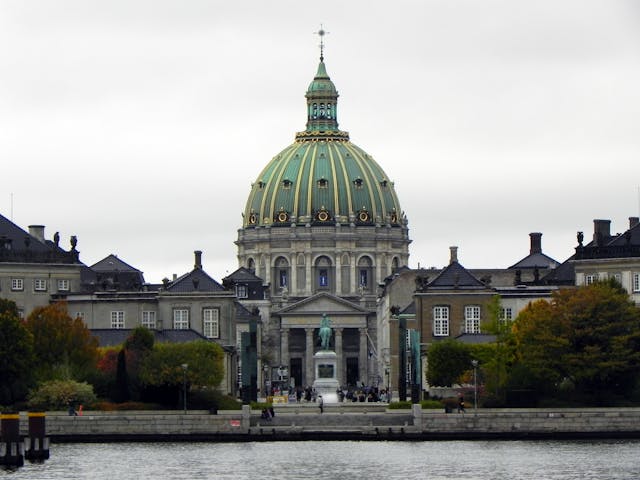
The massive green copper dome is the largest in Scandinavia, spanning 31 meters. When I first saw it, I couldn’t believe something this grand existed in Copenhagen. It looks like St. Peter’s Basilica had a baby with Danish design sensibility.
The story behind this church is wild. Construction started in 1749 but stopped in 1770 because they ran out of money. The unfinished church sat there like a gorgeous ruin for 150 years until a wealthy financier bought it and finished the job in 1894. Talk about persistence!
📍 Practical Details
⏰ Hours:
Monday to Thursday: 10:00 AM to 5:00 PM
Friday: 12:00 PM to 5:00 PM
Saturday: 10:00 AM to 5:00 PM
Sunday: 1:00 PM to 5:00 PM
💰 Cost: Church entry is FREE. Dome tours cost 50 DKK for adults, 20 DKK for children under 18
🎫 Dome Tours: Available at 1:00 PM daily in summer, weekends only in winter
📍 Getting There: Marmorkirken Metro station is right there (M3 and M4 lines)
🌟 What You’ll Experience
The interior is breathtaking. Light floods through those tall windows, illuminating the paintings of the twelve apostles on the dome’s interior. The neoclassical design creates this sense of space that makes you want to just sit and stare.
Outside, you’ll find statues of important Danish church figures, including the philosopher Kierkegaard. The truth is, you could spend an hour just examining all the details on the exterior.
💒 Royal Connection
Crown Prince Frederik married Princess Mary here in 2004. The church is a popular wedding venue, so you’ll often hear wedding bells on Fridays and Saturdays.
🎨 Insider Tips
Visit Amalienborg Palace right across the street afterward
The dome climb is worth it but involves narrow stairs
Free organ concerts happen occasionally (check their website)
The church sits perfectly aligned with Amalienborg Palace and the Opera House (it’s called the Marble Axis)
3. Copenhagen Cathedral (Vor Frue Kirke)
⭐ Rating: 8.5/10 (Thorvaldsen’s masterpieces alone are worth the visit)
🎯 What Makes It Special
This is Denmark’s national cathedral, and it’s home to some of the most famous sculptures in the world. Bertel Thorvaldsen’s statue of Christ with open arms? That’s the original, and it’s been copied in churches worldwide.
What I love about this cathedral is its austere beauty. After the British Navy destroyed the previous church in 1807 (yeah, that happened), architect C.F. Hansen rebuilt it in the neoclassical style between 1811 and 1829. The result is elegant simplicity at its finest.
📍 Practical Details
⏰ Hours: Monday to Saturday 8:00 AM to 5:00 PM, Sunday 12:00 PM to 5:00 PM
💰 Cost: FREE entry (donations welcome)
📻 Fun Fact: Danish public radio broadcasts live services from here every morning (except Sundays) between 8:05 and 8:25 AM
🌟 What You’ll Experience
The moment you walk in, your eyes go straight to Thorvaldsen’s Christ statue above the altar. His welcoming gesture is so powerful that it stops you in your tracks. Along the nave, you’ll find his marble statues of the twelve apostles, each with their traditional symbols.
The baptismal font with the angel holding a scallop shell? That was Thorvaldsen’s personal gift to the church. The Italian marble still looks fresh because of all the loving touches it gets from visitors.
🎭 Historical Significance
Hans Christian Andersen’s funeral was held here in 1875
Søren Kierkegaard’s funeral took place here in 1855
Crown Prince Frederik married Mary Donaldson here in 2004
It’s been rebuilt three times after devastating fires
🎨 Insider Tips
Free half hour organ concerts most Saturdays at noon
Free WiFi available (rare for churches)
Small free museum on the upper level
The surrounding square (Vor Frue Plads) with Copenhagen University is one of the most beautiful in the Old Town
Visit during a service to hear the magnificent organ
4. Grundtvig’s Church (Grundtvigs Kirke)
⭐ Rating: 9.5/10 (Most unique church architecture you’ll ever see)
🎯 What Makes It Special
Okay, this one is a bit out of the city center, but holy wow, it’s worth the trip. Imagine if a Gothic cathedral and a pipe organ had a baby made of six million yellow bricks. That’s Grundtvig’s Church.
The expressionist design by Jensen Klint is unlike anything else in the world. The 49-meter tall façade looks like a massive church organ reaching for the sky. And es que, when you stand in front of it, you feel absolutely tiny.
📍 Practical Details
⏰ Hours:
Monday to Saturday: 9:00 AM to 4:00 PM (extended to 6:00 PM on Thursdays)
Sunday: 12:00 PM to 4:00 PM (1:00 PM in winter)
💰 Cost: FREE entry
🚌 Getting There: Take bus 6A from Rådhuspladsen or Nørreport (get off at Bispebjerg Torv)
🎫 Tower Tours: Occasionally available in Danish only (free but must book in advance)
🌟 What You’ll Experience
The interior is mesmerizingly simple. Natural light pours through those tall, plain glass windows, creating different moods throughout the day. The lack of ornamentation lets the brickwork and Gothic proportions speak for themselves.
The church can hold 1,440 people, and the acoustic properties are incredible. If you’re lucky enough to catch an organ concert, you’re in for a treat. The large Marcussen organ from 1965 has 55 stops and 4,052 pipes.
📖 Background Story
Built between 1921 and 1940 to honor N.F.S. Grundtvig, a Danish priest, educator, and hymn writer. La verdad es que, Grundtvig’s influence on Danish culture was so massive that only an extraordinary memorial would do.
Jensen Klint died before completion, and his son Kaare Klint finished the church. Kaare also designed those iconic simple beech wood chairs with wickerwork seats (Danish design classic).
🎨 Insider Tips
Combine with a visit to Bispebjerg Cemetery’s cherry blossom avenue (stunning in spring)
Best light for photos is in the morning
The Nørrebro neighborhood nearby has great cafes and restaurants
Not open during services (Mass at 10:00 AM on Sundays)
This is a photographer’s dream, so bring your camera
5. St. Alban’s Church (The English Church)
⭐ Rating: 8/10 (Charming English Gothic in the heart of Copenhagen)
🎯 What Makes It Special
This feels like a piece of England dropped into Copenhagen, and there’s a beautiful story behind it. Princess Alexandra of Denmark (who became Queen Consort of the UK) helped fund this church for the growing English community in the 1880s.
The Gothic Revival style by architect Arthur Blomfield makes it stand out. And es que, the use of flint as building material (common in England but unusual in Denmark) gives it a distinctive character.
📍 Practical Details
⏰ Hours (April to September):
Monday to Saturday: 10:00 AM to 1:00 PM
Sunday: 1:00 PM to 4:00 PM
💰 Cost: FREE entry
📍 Location: Churchillparken 11 (next to Kastellet and the Gefion Fountain)
🌳 Bonus: Peaceful park setting with gorgeous views
🌟 What You’ll Experience
The church has fifteen tubular bells that play automatically every quarter hour. The sound drifting across the park is absolutely lovely. Inside, you’ll find beautiful wooden ceilings and stained glass windows that create a warm, welcoming atmosphere.
The location is perfect. You’re right by the citadel Kastellet, the Little Mermaid is a short walk away, and the Gefion Fountain next door is spectacular.
🎭 Royal Connections
Princess Alexandra of Denmark was instrumental in its establishment
Strong ties to British royalty continue today
The Duchess of Gloucester became patron in 2024
🎨 Insider Tips
Services are in English (part of the Church of England’s Diocese in Europe)
Combined perfectly with a walk through Kastellet
The Gefion Fountain next door is worth seeing
Great photo opportunities with the moat and green surroundings
One of Copenhagen’s most peaceful spots
6. Christian’s Church (Christians Kirke)
⭐ Rating: 8/10 (The “Theatre Church” with stunning rococo interior)
🎯 What Makes It Special
People call this the “Theatre Church” and you’ll understand why the moment you step inside. The interior is designed like a theatre with three-storied galleries rising to the full height on three sides. It’s unlike any church you’ve ever seen.
Designed by Nicolai Eigtved in rococo style, it was completed in 1759. Originally built for the German community in Christianshavn, it’s now a regular parish church with a fascinating history.
📍 Practical Details
⏰ Hours: Check website for current hours (varies by season)
💰 Cost: FREE entry
📍 Location: Strandgade 1, Christianshavn
🚇 Getting There: Christianshavn Metro station
🌟 What You’ll Experience
The rectangular layout with the nave positioned between the shorter sides gives it exceptional width. The yellow brick exterior with sandstone details is lovely, but the real surprise is inside.
The altarpiece rises high with a pulpit above it and the organ at the very top (this design is called an integrated altarpiece). The organ stands above a clock face in medieval tradition. Original instrument from 1759 was replaced, but the concept remains.
🎭 Famous Events
The Dalai Lama spoke here in 2000
Regular concerts and cultural events
Large crypt with 46 burial chapels still in use
🎨 Insider Tips
The 70-meter tower was added in 1769
Beautiful chandeliers and elegant rococo details
Often used for concerts (check schedule)
Great acoustics due to the theatre-like design
Located near Freetown Christiania if you want to explore the area
7. Alexander Nevsky Church (Skt. Aleksander Nevskij Kirke)
⭐ Rating: 8.5/10 (Only Russian Orthodox church in Denmark)
🎯 What Makes It Special
Those three golden onion domes are impossible to miss. This is Copenhagen’s little piece of Russia, built between 1881 and 1883 as a gift from Tsar Alexander III for his Danish-born wife, Princess Dagmar.
The design takes inspiration from 17th-century Muscovite architecture, and it absolutely stands out among Copenhagen’s predominantly Scandinavian buildings. La verdad es que, it’s a stunning sight.
📍 Practical Details
⏰ Hours (check before visiting as hours are limited):
Friday: 5:00 PM to 6:00 PM
Saturday: 9:30 AM to 12:00 PM and 4:30 PM to 7:30 PM
Sunday: 9:30 AM to 1:00 PM
💰 Cost: FREE entry (donations appreciated)
📍 Location: Bredgade 53 (just meters from the Marble Church)
🌟 What You’ll Experience
The exterior is dominated by red and grey bricks with sandstone ornamentations, but those gleaming golden domes steal the show. Above the entrance, you’ll see a statue of Alexander Nevsky, the Russian patron saint.
Inside, you’ll find beautiful mosaics, icons, and a magnificent mosaic floor. When sunlight is limited, it can appear dim, but that adds to the mystical atmosphere. The six synchronized bells chime throughout the day, creating a serene soundscape.
🎭 Historical Context
Built for the Russian Orthodox community in Copenhagen
Consecrated in 1883 with Danish, Russian, and Greek royalty present
Now under the jurisdiction of the German Diocese of the Russian Orthodox Church Outside of Russia
🎨 Insider Tips
Very limited visiting hours, so plan accordingly
Can be quite dark inside (part of the Orthodox tradition)
Perfect to combine with Marble Church and Amalienborg Palace
Brings a totally different architectural flavor to Copenhagen
Great for photographers (those domes!)
8. Holmen’s Church (Holmens Kirke)
⭐ Rating: 8/10 (The royal naval church with incredible history)
🎯 What Makes It Special
Originally an anchor forge from 1563, this church has the coolest origin story. King Christian IV converted it into a naval church in 1619, and it’s been connected to Denmark’s navy ever since.
The church survived both of Copenhagen’s great fires (1728 and 1795) and the bombardments of 1658 and 1807. This means what you’re seeing is largely authentic 17th-century architecture. How amazing is that?
📍 Practical Details
⏰ Hours:
Monday, Wednesday, Friday, Saturday: 10:00 AM to 4:00 PM
Tuesday, Thursday: 10:00 AM to 3:30 PM
Sunday and public holidays: 12:00 PM to 4:00 PM
💰 Cost: FREE entry
📍 Location: Holmens Kanal 21
🌟 What You’ll Experience
The Dutch Renaissance style interior is stunning. The carved oak altarpiece from 1661 and the intricately detailed pulpit from 1662 are masterpieces of Renaissance woodwork.
Look up and you’ll see a model ship hanging from the ceiling (a votive ship representing Christianus Quintus from 1674). This naval tradition adds so much character.
🎭 Royal Connections
Queen Margrethe II was baptized here in 1940
She married Prince Henrik here in 1967
Crown Prince Frederik was baptized here in 1968
Crown Prince Frederik and Crown Princess Mary’s twins were christened here in 2011
⚓ Naval History
Burial place of Danish naval heroes Niels Juel and Peter Tordenskjold
Beautiful burial chapel from 1705 with sarcophagi and epitaphs
The “royal doorway” was brought from Roskilde Cathedral in the 19th century
🎨 Insider Tips
One of the few churches to survive Copenhagen’s devastating fires
Beautiful location by the canal
Often quieter than other tourist churches
Rich in maritime history (model ships, naval memorials)
Close to Christiansborg Palace
9. Church of the Holy Spirit (Helligåndskirken)
⭐ Rating: 7.5/10 (Oldest medieval building in Copenhagen)
🎯 What Makes It Special
This is Copenhagen’s oldest remaining medieval building, dating back to the 13th century. Walking into this church is like stepping back in time. The building has survived since 1296 when it started as part of a hospital.
The main church building was destroyed in the Copenhagen fire of 1729, but the portion you see today survived. And es que, knowing you’re standing in one of Copenhagen’s few medieval structures gives you goosebumps.
📍 Practical Details
⏰ Hours:
Monday to Friday: 12:00 PM to 4:00 PM
Saturday: 11:00 AM to 1:00 PM
Sunday: Open only during church service (10:00 AM in winter, 11:00 AM in summer)
💰 Cost: FREE entry
📍 Location: On Strøget pedestrian street (midway point)
🌟 What You’ll Experience
The Gothic architecture features a beautiful bell tower that looks like it’s from 1582, though it’s actually a reconstruction from 1880. The Renaissance-style portal from 1630 shows King Christian IV’s monogram.
Inside, ornate chandeliers and tall clear windows fill the space with light. The church hosts regular concerts and cultural events, and I’ve attended some beautiful free Christmas concerts here.
📅 Historical Timeline
1296: Founded as part of a hospital
1469: Became an abbey
1537: Converted to Protestant church after the Reformation
1728: Severely damaged in Copenhagen’s great fire
Still standing after 700+ years!
🎨 Insider Tips
Perfect shopping break on Strøget
Check their calendar for free concerts
One of the oldest parts is the front portal
Often hosts cultural events
Great acoustic properties for concerts
10. Trinitatis Church (Trinity Church)
⭐ Rating: 7.5/10 (Connected to the famous Round Tower)
🎯 What Makes It Special
This church is part of the incredible Trinitatis Complex, which includes the Round Tower (Rundetårn) astronomical observatory. The complex was built by King Christian IV between 1637 and 1656, and it’s a masterpiece of Danish architecture.
What makes this unique is that you can view the church interior from a glass window inside the Round Tower viewing platform. But visiting the church itself gives you a completely different experience.
📍 Practical Details
⏰ Hours: Check website for current hours (often closed for sightseeing but viewable from Round Tower)
💰 Cost: FREE to view from Round Tower window. Round Tower admission: 40 DKK adults, 10 DKK children
📍 Location: Part of Rundetårn complex in the city center
🌟 What You’ll Experience
The baroque interior features a magnificent Italian baroque organ. The wooden ceiling is absolutely stunning, and the neo-Gothic design inspired by English architecture (built 1876 to 1878) creates a warm atmosphere.
Free organ concerts are sometimes held here, and the acoustics are phenomenal. The church’s connection to the astronomical observatory above adds an interesting dimension to the visit.
🔭 The Round Tower Connection
The church is part of an architectural complex with the Round Tower
You can see into the church from the tower’s observation deck
The tower offers one of the best views in Copenhagen
King Christian IV’s grand vision combining religion, science, and education
🎨 Insider Tips
Combine your visit with climbing the Round Tower (absolutely worth it)
The view from the glass window gives you a unique perspective
Check concert schedules for free performances
Beautiful wooden ceiling is the highlight
Part of Copenhagen’s historic Latin Quarter
Planning Your Church Hopping Adventure
🗺️ Best Routes
If you only have one day, here’s my recommended route:
Morning Route:
Start at Copenhagen Cathedral → Walk to Round Tower/Trinitatis Church → Continue to Church of the Holy Spirit on Strøget
Afternoon Route:
Marble Church → Alexander Nevsky Church (right next door) → St. Alban’s Church → Walk through Kastellet
Christianshavn Route:
Church of Our Saviour → Christian’s Church → Holmen’s Church
Special Trip:
Grundtvig’s Church (dedicate 2 to 3 hours including travel)
💰 Money-Saving Tips
Most churches offer FREE entry
Copenhagen Card includes Church of Our Saviour tower
Many churches offer free organ concerts
Combine multiple churches in one area to save on transport
🎫 Copenhagen Card Benefits
If you buy the Copenhagen Card, you get:
FREE admission to Church of Our Saviour tower
FREE public transport to all churches
FREE entry to 80+ attractions
Worth it if you’re visiting multiple paid attractions
Best Times to Visit
🌞 Seasonal Considerations
Summer (June to August):
✅ Longest opening hours
✅ Best weather for outdoor spires
❌ Most crowded
❌ Higher prices at some attractions
Spring/Fall (April to May, September to October):
✅ Fewer crowds
✅ Pleasant weather
✅ Cherry blossoms at Bispebjerg Cemetery (spring)
❌ Shorter opening hours
Winter (November to March):
✅ Magical Christmas atmosphere
✅ Fewest tourists
❌ Church of Our Saviour tower closed mid-December to February
❌ Shorter daylight hours
❌ Some churches have reduced hours
⏰ Best Times of Day
Early morning (9:00 to 10:00 AM): Peaceful, beautiful light, fewer tourists
Midday: Some churches close for lunch
Late afternoon: Golden hour light is gorgeous for photography
Check for evening concerts and special events
Essential Tips from a Local
👕 Dress Code
Most Danish churches are relaxed about dress
Modest attire is appreciated (covered shoulders and knees)
You’ll be doing a lot of walking, so comfortable shoes are essential
📸 Photography
Generally allowed in most churches
No flash during services
Be respectful of worshippers
Tripods often not permitted
🎶 Attending Services and Concerts
Many churches offer free organ concerts
Services are usually in Danish (except St. Alban’s)
Concert schedules are posted on church websites
Sitting in on a service is a beautiful cultural experience
🌤️ Weather Considerations
Church of Our Saviour tower closes during bad weather
Check weather forecast before planning tower climbs
Many churches provide shelter from rain (Copenhagen gets plenty)
Final Thoughts: Why These Churches Matter
After years of exploring Copenhagen, I keep coming back to these churches. They’re not just tourist attractions or pretty buildings. They’re living spaces where Copenhagen’s history breathes.
Whether you climb to the top of Our Saviour’s spiral, stand in awe beneath the Marble Church’s dome, or simply sit quietly in the Cathedral contemplating Thorvaldsen’s Christ, you’re connecting with centuries of human creativity and faith.
The best part? You don’t need to be religious to feel moved by these spaces. Architecture, history, art, and human ambition come together in ways that transcend belief systems.
Copenhagen’s churches have survived fires, bombardments, and the test of time. They’ve hosted royal weddings, witnessed revolutions, and comforted generations of Copenhageners. When you visit them, you become part of that continuing story.
So take your time. Don’t rush through these spaces trying to check them off a list. Sit. Look up. Notice the details. Let the light play across the stones. Listen to the silence (or the organ music). Feel the weight of history around you.
These sacred spaces have taken my breath away countless times, and I’m pretty sure they’ll do the same for you.
Ready to start your journey? Pick one church to begin with, and I promise you’ll want to see them all.
Practical Resources
📱 Useful Apps:
Copenhagen Card app (for free entries)
Google Maps (for navigation)
Rejseplanen (for public transport)
🌐 Official Websites:
Visit Copenhagen (visitcopenhagen.com)
Copenhagen Card (copenhagencard.com)
Individual church websites (check for concerts and events)
🚇 Getting Around:
Copenhagen Metro (easy, efficient)
City buses (extensive network)
Bikes (the Copenhagen way)
Walking (city center is very compact)
Safe travels, and enjoy every moment in these incredible sacred spaces! 🇩🇰⛪✨